Eggplants can keep producing for a long time, but only if the plant is not asked to carry every shoot, every leaf, and every fruit at once. After the first fruit sets, the crop needs a clearer structure: which stems will carry the harvest, which side shoots should stop competing, and how water should support fruit growth without weakening the roots.
The main eggplant growing guide looks at the full crop cycle. The earlier eggplant seedling transplant guide focuses on root recovery before the plant starts working. This article starts later, when early fruit load, pruning, leaf removal, and harvest rhythm begin to decide how long the plant can stay productive.
The first fruit changes the job of the plant
Before fruit set, the useful goal is a strong root system and steady vegetative growth. Once the first fruit is held, the plant begins dividing energy between leaves, stems, flowers, and fruit. If all side shoots are allowed to grow freely, the canopy may look strong while fruit size and harvest quality become uneven.
Do not judge the crop only by leaf volume. Look at where the first fruit is set, how strong the main stems are, and whether lower side shoots are crowding the base. The first adjustment should make the plant easier to read. A tangled plant is harder to water, harvest, and support.
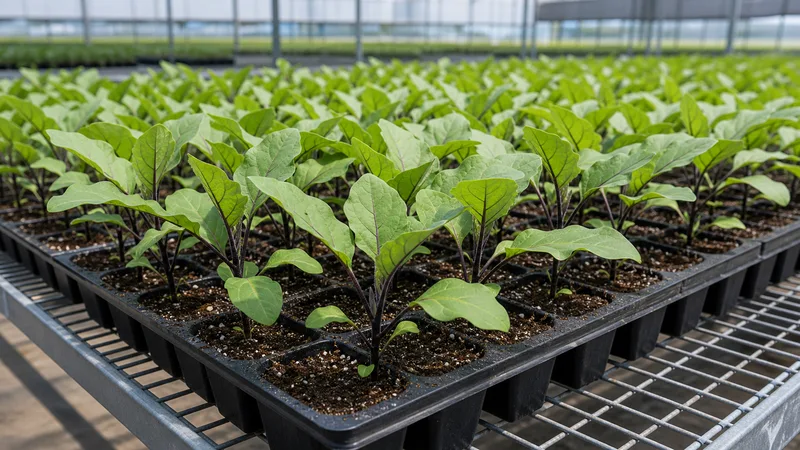
Pruning should match the growing system
Protected or greenhouse eggplants often need more deliberate pruning than open-field plants. Dense protected canopies hold humidity and shade fruit; open-field plants may be managed more lightly, especially when spacing is wider and airflow is good.
Single-stem, two-stem, and multi-stem systems all exist, but the practical question is simpler: how many fruiting stems can this plant support without becoming crowded? Keeping fewer stronger stems can concentrate growth and make fruit easier to pick. Keeping too many stems may increase early leaf mass but make later fruiting uneven.
Remove weak shoots near the base, crowded inner shoots, and branches that make harvest access difficult. Avoid tearing branches by hand when the shoot is thick. Clean cuts and smaller repeated adjustments are easier on the plant than one heavy correction after the canopy has already closed.
Old leaves can be removed, but not all at once
Leaf removal is useful only when it has a purpose. Lower old leaves, shaded leaves, and leaves that block harvest access may be removed gradually. Healthy leaves near active fruit should not be stripped simply because the plant looks dense.
Too much leaf removal can expose fruit suddenly and reduce the plant's ability to feed the next harvest. A better pattern is to open the lower canopy in stages, then watch whether new flowers, young fruit, and growing fruit remain balanced. This is similar to pepper transplant and early flower management: forcing the plant too early often creates a short harvest rather than a longer one.
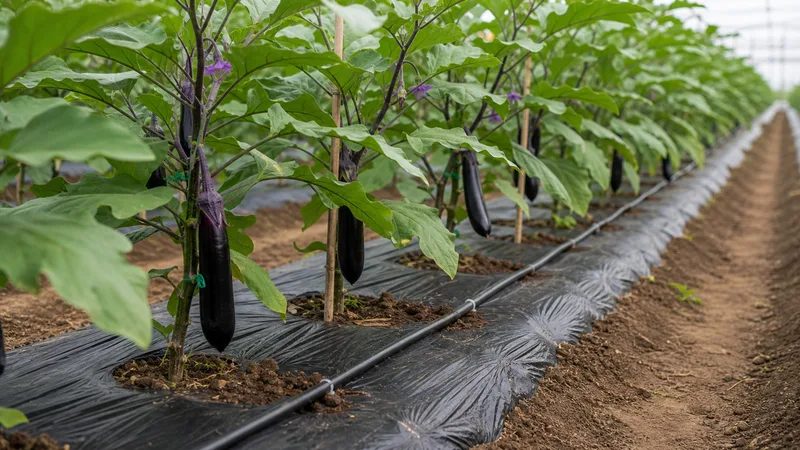
Water should be steady, not dramatic
Eggplants like moisture, but they still need air around the roots. Heavy watering after a dry spell can disturb fruit growth and make the root zone unstable. Constant wetness is no better. The goal is a root zone that stays evenly moist while the soil remains breathable.
After transplanting, water helps roots settle. Around early flowering and first fruit set, watering should respond to soil and weather rather than a fixed number of days. Once fruits begin sizing, moisture swings can show up as uneven fruit shape, slower picking intervals, or a plant that drops flowers while carrying fruit.
Use smaller, timely irrigation instead of rescue watering. If rain or irrigation leaves the bed wet for too long, improve drainage before adding more fertility. The same principle appears in tomato watering and fruit cracking: fruiting vegetables often react badly when dry roots are suddenly pushed with too much water.
Harvest before old fruit slows the next set
Eggplant harvest timing affects the whole plant. Fruit that stays too long keeps drawing energy, and the next flowers and young fruit may slow down. Picking at the right stage keeps the plant moving through repeated harvest cycles.
Check fruit skin, size, firmness, and seed development rather than waiting for maximum size. Smaller, cleaner harvests made more often usually protect eating quality and reduce plant load. If fruit quality starts to vary in one area of the bed, look back at canopy density, water rhythm, and branch load before blaming the cultivar.
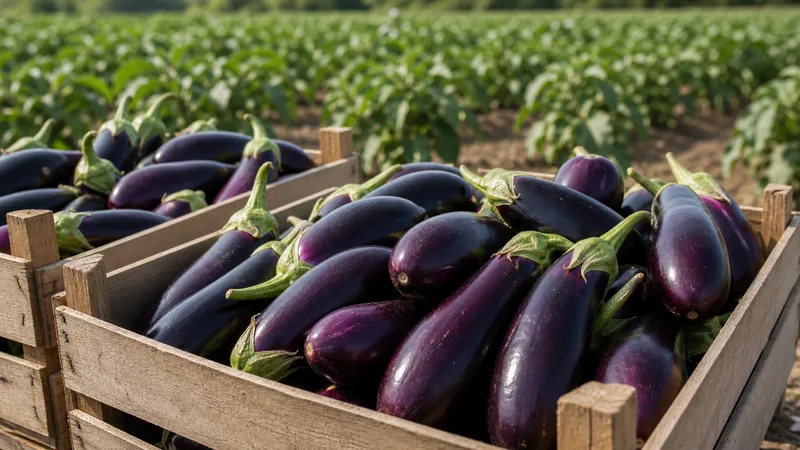
A productive eggplant crop is not built by letting every shoot grow. It is built by keeping the plant readable: enough stems to carry fruit, enough leaves to feed it, enough airflow to inspect it, and a harvest rhythm that removes mature fruit before they become a burden.