Pepper seedlings can look acceptable in the tray and still fail after transplanting if the nursery period was rushed. Even emergence, a stable root ball, moderate leaf growth, and a short hardening period matter more than simply sowing early.
The main pepper growing guide looks across branching, flowering, and repeat harvest. This guide stays inside the seedling stage: how to manage sowing timing, moisture, temperature, light, and the last few days before plants leave the nursery.
Start from the transplant window, not from impatience
Pepper seedling schedules work best when they are counted backward from a realistic transplant date. A warm bed or protected nursery can make seed emerge earlier, but a field or tunnel that is still cold, wet, or poorly prepared will leave seedlings waiting too long in the tray.
Over-aged seedlings often show the problem later: roots circle tightly, lower leaves lose freshness, and plants hesitate after planting. Under-aged seedlings are not better; if the root ball breaks easily or the stem is still soft, the plant loses recovery speed as soon as it is moved.
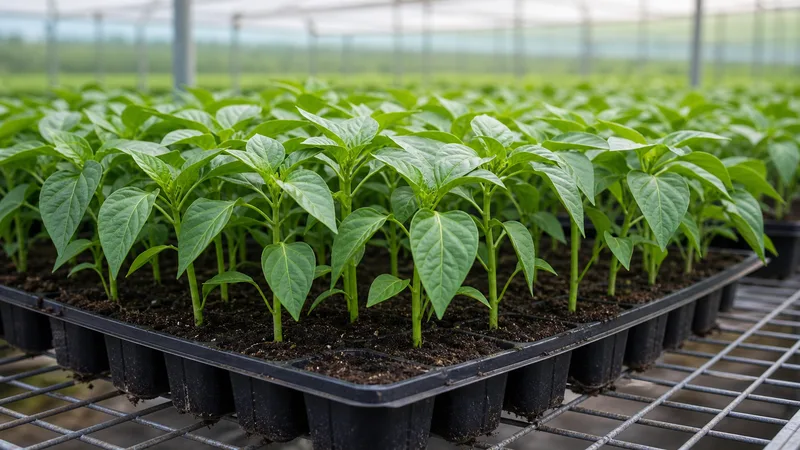
Uniform emergence is the first quality check
A good pepper nursery does not rely on a few early seedlings. The useful batch is the one that emerges close together, because those plants can later be watered, ventilated, hardened, and transplanted as a group. Uneven emergence usually begins with uneven seed depth, unstable moisture, or a seedbed that cools and heats in patches.
Keep the sowing layer fine and settled, but not compacted. After sowing, moisture should be steady enough for germination without leaving the surface sealed and airless. If the nursery medium swings from too wet to too dry, the weakest seedlings are selected out before the crop even reaches the field.
Do not force tall seedlings
Fast height is not the same as seedling strength. Peppers need a compact stem, leaves that are active but not overly lush, and roots that hold the plug or bed soil together. Too much shade, crowded trays, excessive warmth at night, or water kept constantly high can produce soft seedlings that look large but handle poorly.
Ventilation should increase gradually as seedlings establish. The aim is not to stress the plants, but to keep the nursery from becoming still, humid, and weak. Light, airflow, and spacing together decide whether a pepper seedling is stocky enough to move without a long pause.
Watering should prepare the root ball
In the early nursery stage, moisture protects emergence. Later, watering should help roots search through the medium rather than sit in a saturated layer. The surface can be allowed to breathe between irrigations, while the root zone must not dry so far that seedlings wilt and stop growing.
The last watering before transplanting needs judgment. A dry root ball breaks and sheds medium; a soaked root ball is heavy, fragile, and easy to damage. The better condition is firm, lightly moist, and easy to lift.
Hardening is a short transition, not a punishment
Hardening works when it is gradual. A few days of slightly stronger light, more air movement, and more careful watering can help peppers adjust before transplanting. Sudden cold exposure, severe drying, or long delays after hardening can reduce the benefit and make seedlings slower to restart.
If the field date changes, nursery care must change with it. Seedlings that have already been hardened should not simply be held tight for another week without water and nutrition management. It is usually better to keep them steady and transplant when both the plant and the bed are ready.
Link the nursery to transplant recovery
The seedling stage ends only when plants restart in the field. Before moving a batch, check root ball firmness, stem thickness, leaf color, tray uniformity, and the moisture of the planting bed. A strong nursery batch can still suffer if planted into dry ridges, cold soil, or windy conditions without follow-up watering.
For the next step after planting, the pepper transplant watering guide covers how to reduce wilting and help roots reconnect with the bed. Used together, the nursery and transplant stages form one continuous recovery plan rather than two separate jobs.