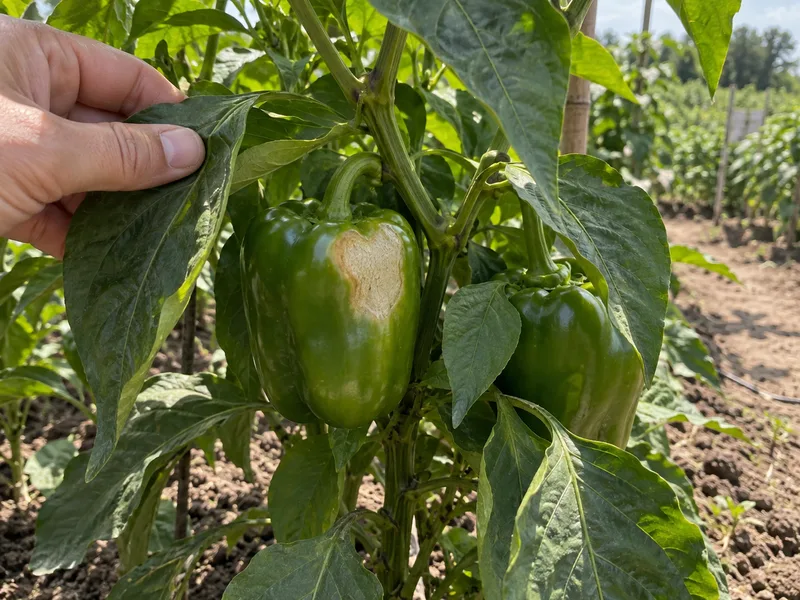
A green pepper is growing normally, but one shoulder has turned pale and dry. Before reaching for a spray, look at where that patch sits. Is it on the side that faces the strongest afternoon sun? Does another fruit tucked under leaves remain unmarked? The position of the damage and the shape of the canopy are often more useful than the color of the patch alone.
Sunscald is injury to exposed fruit tissue. It can start as a light tan or whitish area and become dry, thin or papery. Once tissue is damaged, it will not turn back into sound green skin. The immediate job is to identify the affected fruit accurately and keep the next fruits covered as they grow.
Turn the fruit without tearing the branch
Support the pepper in one hand and look at its sunward side, lower end and the side closest to the stem. Do not pull it around by its stalk; pepper branches can break easily. A broad, pale patch on the exposed shoulder is consistent with sunscald, especially if it appeared after leaves were lost or a heavy pruning opened the canopy. Oregon State University's pepper guide describes light brown or white patches on sun-exposed fruit and notes that a thin leaf canopy raises the risk.
Now compare a second fruit of similar age that hangs deeper inside the same plant. If its shaded side is clean while the outward-facing pepper carries the dry patch, that comparison supports the sun-exposure explanation. Photograph both fruit and the leaf cover above them; a close-up of one discolored pepper leaves out the most useful context.
The location can also point away from sunscald. Damage concentrated at the blossom end, a water-soaked soft area, black sunken rot or multiple small raised scabs calls for a different diagnosis. The University of Minnesota's pepper symptom guide separates sunscald from blossom-end rot and several fruit diseases by where and how the marks develop. If the fruit is soft, moldy or breaking down, remove and discard it. Do not label every pale mark as harmless sun injury.
Trace how that pepper became exposed
Look up from the fruit. Was a leaf removed to improve access at picking? Did a branch lean over and open a gap? Have insects, leaf spots or drought stress reduced the cover? A pepper can receive plenty of light for growth while its fruit still needs protection from a hot, direct afternoon exposure. This is why the answer is usually found in the canopy above the fruit, rather than in the damaged spot itself.
Walk two or three plants in the same row. If the patches appear only on the newly open side after a recent pruning, change how much foliage you remove at one time. Leave healthy leaves that shade developing fruit. If the whole row looks sparse, check roots, water delivery and the reason leaves were lost before assuming a fertilizer is missing. The site's pepper first-harvest article covers how to keep access to later fruit without stripping the plant during one picking pass.
In a small planting, temporary shade cloth or a screen can protect exposed fruit during the strongest late-afternoon sun; secure it so it does not rub the fruit or trap excessive heat. Oregon State describes afternoon shade as a useful option. Choose the amount and duration for the actual site: a cool, cloudy week does not call for the same setup as an exposed hot spell. Keep the root zone evenly supplied with water, using soil moisture rather than a fixed daily schedule to decide when to irrigate. More water will not repair a pale patch that has already formed.
Decide what to do with this harvest
Separate the marked pepper from sound fruit when picking. Fruit with a large injured area, a split, soft tissue or signs of secondary decay should not enter a fresh-storage or sale batch. Check local food handling guidance before considering any use of damaged produce; when in doubt, discard it. University of Maryland Extension advises removing affected fruits and protecting future fruit with healthy foliage.
Afterward, watch the young peppers still on the plant. They are the real measure of whether the canopy adjustment worked. Record which side of the row was exposed, when leaves were lost, and whether new fruit remains shaded through the hottest part of the day. If the plant is still rebuilding after transplanting, the separate pepper transplant recovery guide helps with the earlier root-zone stage. Here the useful decision is specific: read the mark together with its position, protect the next fruit, and investigate symptoms that do not fit.