Vine & Melon Crops

Passion Fruit Growing Guide: Keep the Trellis Clear So Fruit Is Easy to Find

Passion fruit vines need a clear trellis, trained leaders, managed fruiting laterals, airflow, load control, and reliable ripeness checks.

passion fruitvine cropstrellis managementairflowripeness
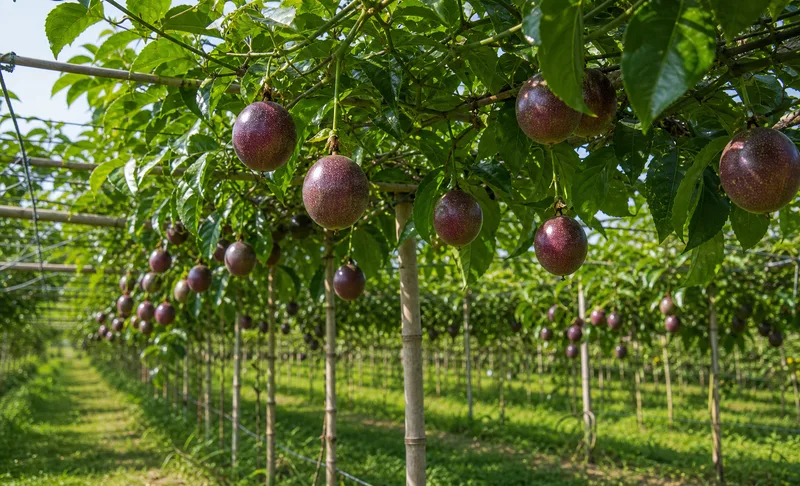
Passion fruit growing reference image
Passion fruit quality starts with a growing system that is easy to inspect, water, and harvest.

Passion fruit vines need a clear trellis, trained leaders, managed fruiting laterals, airflow, load control, and reliable ripeness checks.

This guide is written for gardeners, small farms, and crop managers who want practical decisions rather than a fixed calendar. Local climate, soil texture, cultivar choice, and growing method will change the details, but the core checks stay similar.

Start with the growing site, not only the plant

Before planting passion fruit, look at drainage, sun exposure, airflow, and access for routine work. A site that stays wet too long, dries unevenly, or blocks air movement will make later watering, pruning, and harvest decisions harder.

The main planning point for this crop is trellis clarity, fruiting laterals, airflow, crop load, and harvest signals. When those pieces are clear before planting, the crop has fewer avoidable setbacks later in the season. Trellis layout and fruiting wood renewal can be compared with kiwifruit vine training and canopy control.

Build strong early growth before asking for yield

Early growth should be steady rather than forced. For passion fruit, the first useful goal is a root system and canopy that can support the next stage without stress. Weak starts often show up later as uneven flowering, poor sizing, or short harvest windows.

Watch trained leaders, flowering laterals, hanging fruit, and ripe drops. These stages tell you whether the plant is balanced or whether water, spacing, training, or crop load needs to be adjusted before the problem becomes expensive. For another perennial vine where support structure shapes the crop, see grape trellis and harvest-cluster management.

Water for consistency, not just for speed

Most growing problems become worse when moisture swings sharply. Watering should keep the active root zone useful without leaving it airless. Mulch, raised beds, drip irrigation, or careful furrow management can all help, depending on the crop and site.

Do not use a rigid watering schedule without checking the soil. After rain, heat, wind, or heavy fruit load, the same crop may need a different response. Good irrigation is usually quiet and steady, not dramatic.

Keep the canopy open enough to inspect

A crop that cannot be inspected easily is harder to manage well. Leaves, vines, branches, or crowded rows should be arranged so that light, air, and harvest access remain available. This is especially important when disease pressure, humidity, or repeated picking is part of the system. Dense-vine harvest problems also appear in bitter melon trellis access and repeated picking.

The issue to avoid is a crowded trellis where fruit is hard to inspect or pick. Once that pattern appears, growers often spend more time correcting symptoms than improving the crop.

Harvest by condition, not by guesswork

Harvest timing should be based on crop condition, intended use, and handling needs. Size alone is not enough. Look at firmness, color, aroma, dry-down, skin condition, or storage readiness according to the crop.

Small test harvests are useful. They reveal whether the crop is ready for fresh use, storage, shipping, or another few days of field time. This is often more reliable than relying on a single date.

Related growing decisions

If you are comparing crop systems, also read Watermelon Growing Guide: Read Vine Growth, Soil Moisture, and Ripeness Together and Pumpkin Growing Guide: Strong Vines Still Need Fruit Position and Drainage. These related guides help connect watering, spacing, canopy work, and harvest timing across similar crops.

Frequently asked questions

What is the most common mistake with passion fruit?

The most common mistake is treating one symptom in isolation. Watering, spacing, crop load, airflow, and harvest timing usually interact, so the better approach is to check the whole growing system.

Can this crop be grown in a small garden?

Yes, if the variety and layout match the space. Small gardens need clear access, steady moisture, and enough room for air movement. Compact systems often fail when too many plants are crowded into a small bed.

When should harvest begin?

Begin when the crop meets the use you need, not only when it looks large. For fresh eating, flavor and texture matter; for storage or transport, firmness, maturity, and handling condition become more important.

Related Reading