Watermelons are easy to misread near harvest. A large fruit is not always ready, and a dry tendril by itself is not always enough. Better harvest timing comes from reading fruit position, rind surface, ground spot color, vine condition, moisture rhythm, and harvest batches together.
This article continues from the earlier guide on watermelon fruit position and moisture after fruit set. If the fruit was placed and supported well earlier, the final ripeness checks become much easier.
Use several ripeness signals together
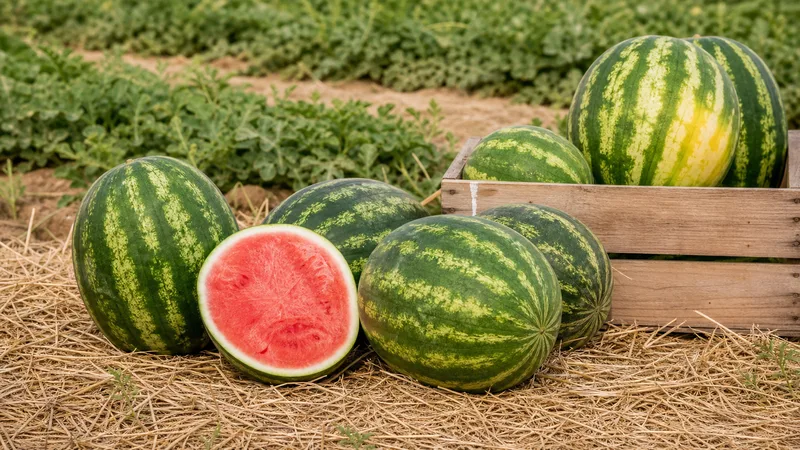
Watermelon maturity should not be judged by size alone. Before harvest, compare rind surface, ground spot color, tendril condition near the fruit, the feel of the fruit, and the timing of fruit set for that batch. Any single signal can be affected by cultivar, weather, and water conditions.
If the fruit is large but the ground spot is still pale, the vine remains very active, or the fruits in the same group did not set at the same time, the whole patch should not be treated as one uniform harvest. Melon crops often need batch decisions rather than one large guess.
Late water swings make timing harder
Near maturity, uneven water makes watermelon quality harder to read. A dry period followed by heavy watering can push the fruit unevenly. Long wet conditions late in the crop can also make texture, flavor, and handling quality less predictable.
The same caution appears in melon maturity checks before harvest. Late vine crops do not need to be pushed harder at the end. They need a steady finish, then harvest timing based on use and maturity.
Hidden fruit needs earlier checking
A watermelon that sits on damp ground, hides under dense leaves, or rests too close to a walkway can be harder to judge. A few days before harvest, gently clear enough foliage to see the fruit surface, support, and ground contact. Avoid pulling vines hard at this stage.
This is similar to pumpkin fruit resting and maturity checks. Fruit position is not only about appearance. It affects observation, dryness, and damage risk near harvest.
Harvest in batches when signals differ
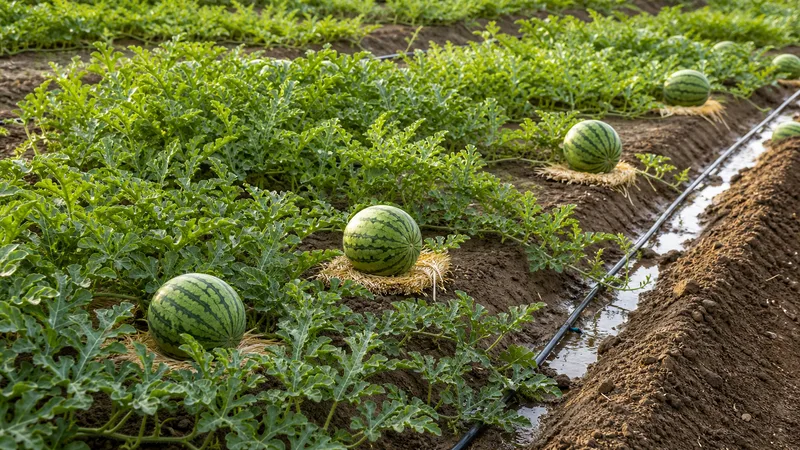
Pollination time, fruit position, and soil moisture are rarely identical across one planting. Fruit with clear, matching maturity signals can be picked first, while uncertain or younger fruit can be checked again later. That usually protects quality better than harvesting everything at once for convenience.
After picking, sort fruit by maturity, surface condition, and intended use. Fruit with damage, overripe signals, or uncertain maturity should not be mixed with the best batch. The most useful record for next season is where harvest timing was easiest to read and where the signals stayed confusing.