A watermelon bed is easy to stop seeing once the last fruit has gone. The vines are cut back, crates are moved, and attention shifts to whatever needs to happen next. But the old bed is still carrying a record of the season. It shows where vines crowded, where a path stayed clear, where the soil surface changed, and which part of the field asked for more visits than the rest.
That record is more useful than a quick decision to use the same ground again or leave it alone. A good handoff starts by walking the field while its last shape is still visible. The aim is not to prescribe the next crop from a checklist. It is to leave the next decision with a clearer picture of what this particular bed has just been through.
Walk the old rows before they disappear
Take one unhurried pass along the former vine line before the field is fully cleared or reworked. Look for practical differences rather than dramatic problems: a section that stayed difficult to reach, a low place that held more residue, a compacted turn at the end of a row, or a patch where the canopy closed earlier than elsewhere. These observations are easiest to make when the crop's footprint is still on the ground.
Write them as locations, not conclusions. “The far end stayed damp after harvest” is a useful note. “This bed is bad” is not. A location gives the next walk something to check. It also separates what was actually seen from a judgement made after a long and busy season.
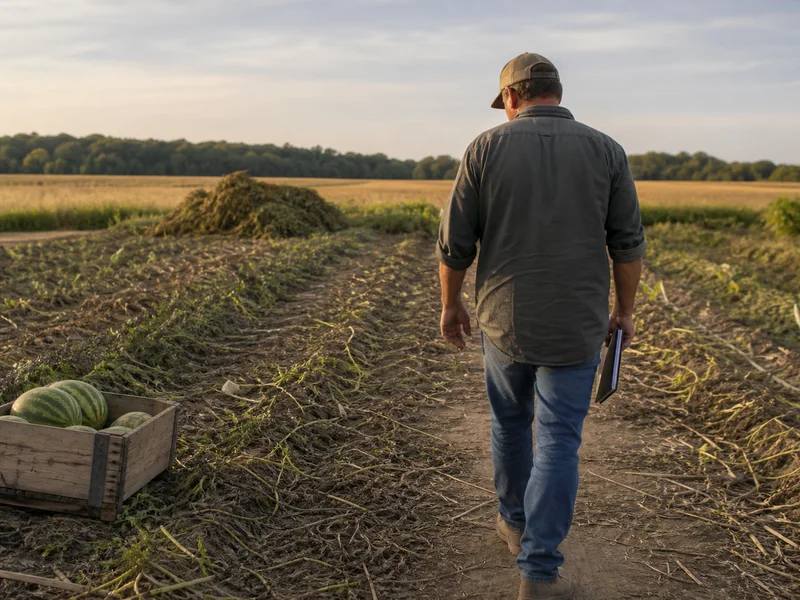
Let harvest leave a field map, not just an empty bed
Harvest already creates a rough map. The places where fruit was easier to find, where people repeatedly turned, and where crates waited all reveal how the crop and the work moved across the ground. The watermelon ripeness and harvest signals matter at picking time; after picking, the route used to reach those fruit can be just as revealing.
Keep the map simple. A few marks for the main path, the wetter edge, the area that was hard to see into, and any spot that needs another look are enough. This is not a field trial. It is a way to make sure the next plan starts with the actual layout of the old crop rather than a memory reduced to “we grew watermelons there.”
Separate crop memory from next-season wishes
It is tempting to decide the next use of a bed while clearing it, especially when there is already a preferred crop in mind. Pause first. The last watermelon crop has its own story, and that story should be recorded without being bent to support a decision already made. What was easy to inspect? What stayed hidden? Which area needed a second pass? Those answers describe the field before they recommend anything.
Rotation is not only about naming a different crop. It also changes the way a field will be entered, covered, watered, and observed. The earlier watermelon fruit-setting guide looks at position while the vines are active; this later walk asks what that season-long position and movement left behind for the person returning to the bed.
End with one question that can survive the interval
Before leaving the cleared ground, write one question for the next time it is opened. It could be “is the low corner still the last place to dry?”, “does this row end still receive the most traffic?”, or “can the main inspection path be seen from both ends?” A specific question makes the gap between crops part of the management record instead of a blank period.
When the next crop is considered, the field will not need to answer every question at once. It only needs to be read in sequence: what the previous crop revealed, what conditions look like now, and what work must remain possible after the new plants occupy the space. That makes a watermelon bed's final walk useful even when the next season has not yet been decided.