After watermelon fruit sets, the focus shifts from vine growth to whether the selected fruit can size evenly. Many harvest problems begin earlier, with fruit position, moisture swings, ground contact, and the load carried by the vine.
The existing watermelon guide on vine growth, moisture, and ripeness signs focuses more on maturity checks. This article looks earlier in the season: which fruit to keep, how to protect the fruit surface, and how to keep sizing steady before harvest decisions become urgent.
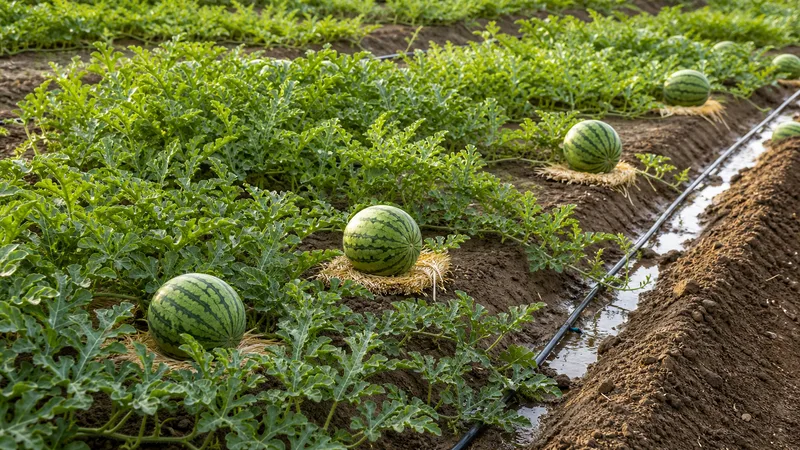
The first fruit to set is not always the best one to keep
Fruit selection should not be based only on which watermelon sets first. A fruit too close to the crown may look strong early but may not give the most balanced size and shape later. A fruit set too far out may miss the best supply window from the plant.
A better check includes node position, main vine or side vine strength, leaf area, and total plant load. Weak vines carrying too many fruit often finish none of them well. Strong vines carrying too little fruit may keep pushing leaves and delay an even harvest rhythm.
Fruit support is about risk, not appearance
Once a watermelon begins to size, the lower surface can sit against wet soil, uneven ground, and temperature swings for a long time. A damp underside or rough contact point can affect skin condition and fruit shape.
Using a pad, adjusting the fruit position, or keeping the melon away from low wet spots is not only for neatness. It gives the fruit a steadier surface during rapid sizing. This matters most after rain, in low areas, or where the bed surface stays uneven.
Keep moisture steady during fruit sizing
Watermelons need moisture while fruit is expanding, but they do not respond well to sharp swings. A dry period followed by heavy watering can change fruit expansion quickly and may affect shape, internal fill, or cracking risk later.
This has a similar logic to tomato cracking and watering swings. The crops differ, but fast-growing fruit often needs a steady moisture pattern instead of sudden correction after stress has already built up.
Avoid forcing every fruit into the same harvest window
If pollination, fruit selection, and watering all happen in one tight wave, many melons can approach harvest at the same time without being equally mature. That makes picking decisions harder, especially in small plantings where harvesting too early or too late is easy.
Simple notes help: when the fruit set, which vine carried it, where it sits, and whether sizing stayed smooth. Those observations are more useful than relying only on tendrils or sound at harvest.
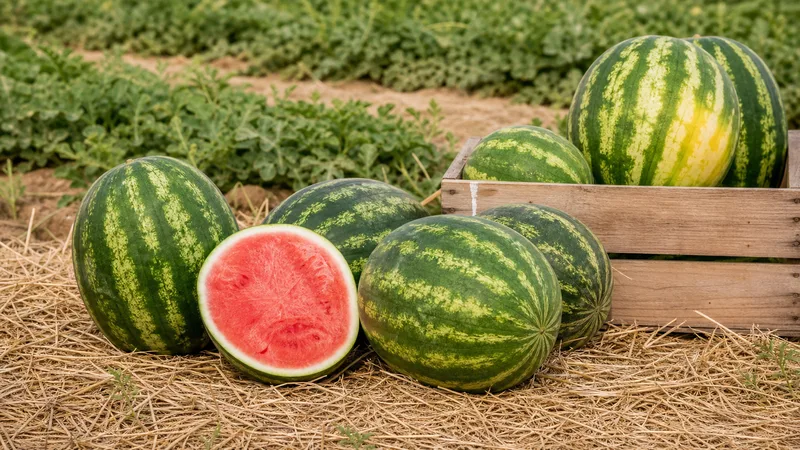
Like other melons, balance the plant before judging the fruit
Vine crops share a simple rule: do not judge only by strong vines or one large fruit. Melon flavor and harvest timing depend on plant load before harvest, and pumpkin vine and fruit position can shape later quality. Watermelon works the same way: vine, leaf area, fruit position, and water need to be read together.
After fruit set, watermelon care is not about keeping the most fruit. It is about helping the right fruit size steadily, with stable moisture, a good position, and a vine that can support it through harvest.