Melon flavor is shaped long before the fruit is cut open. After fruit set, the grower has to balance leaf area, fruit load, soil moisture, and the final days before harvest so the plant can fill fruit without diluting sweetness.
The main melon growing guide covers the full crop from planting through harvest. This guide focuses on the narrower window after fruit set: which fruit to keep, how to manage vines around the fruit, and why water rhythm changes as the melon moves from sizing to ripening.
Fruit set is a selection point
Once several young melons appear, it is tempting to leave every fruit that starts. That usually makes the plant harder to manage. Too many fruits compete for the same leaf area, and the result can be uneven size, delayed maturity, or fruit that looks acceptable but lacks eating quality.
Selection should happen while the fruit is still young enough to redirect plant energy. Keep fruit that sits in a manageable position, develops evenly, and can be supported without crowding the vine. Remove weak, misshapen, badly placed, or late fruit before it drains the plant.
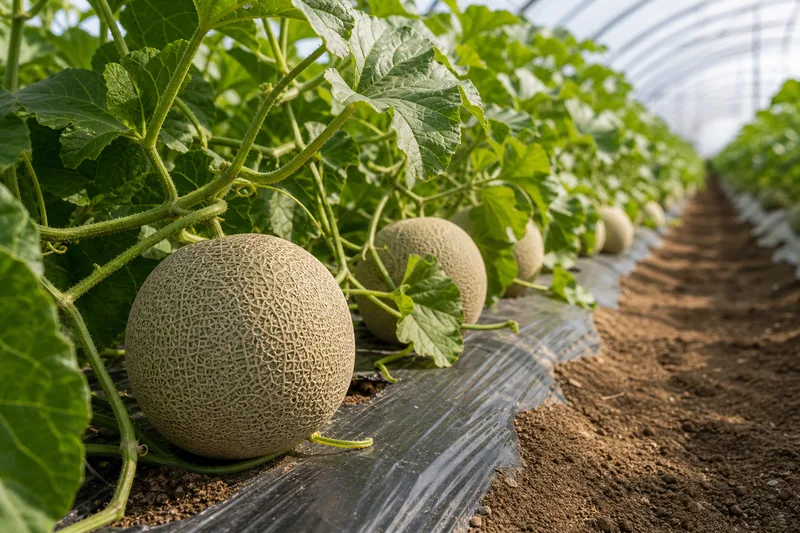
Keep enough leaves, but do not bury the fruit
Leaves feed the fruit, so pruning should not strip the vine. At the same time, a canopy that becomes too dense can trap humidity, hide fruit position, and make it harder to notice cracking, uneven swelling, or fruit resting on damp soil.
The useful canopy is open enough for inspection and airflow, while still carrying enough healthy leaves to support sugar movement. Instead of removing shoots mechanically, check where the fruit sits, how much leaf cover protects it from stress, and whether workers can still reach the vine without damage.
Water rhythm changes after the fruit starts sizing
During early fruit enlargement, steady moisture helps the plant move water and nutrients into the fruit. Sudden dry periods followed by heavy watering can create rapid swelling, uneven rind pressure, and a higher risk of fruit quality problems. Constantly wet soil is not better; it can weaken roots and make flavor harder to concentrate later.
Field checks should look at the root zone, not just the top surface. If the upper soil is dry but the root zone still holds moisture, irrigation can wait. If the plant wilts during the day and does not recover well by morning, the water rhythm may already be behind.
Do not chase size at the expense of flavor
A melon can gain size and still lose balance. Once fruit has reached its main size, management should shift toward steady ripening rather than pushing fresh vine growth. Excessive late water or too much new vegetative growth can make the fruit heavier without improving sweetness.
This does not mean the crop should be stressed severely. The goal is gradual adjustment: keep the plant active, avoid sudden swings, and let ripening fruit finish without being diluted by overcorrection.
Fruit position affects harvest quality
Fruit that rests in a wet spot, rubs against a hard ridge, or sits hidden under tangled vines may develop uneven color or surface damage. A quick position check after fruit set can prevent many later grading problems. In trellised or protected systems, support and spacing should be checked before the fruit becomes heavy.
Where fruit touches the ground or bed surface, keep the contact area clean and dry enough. If fruit needs to be adjusted, move it gently and early; late movement can crack stems or disturb the vine.
Read maturity from several signs together
Harvest timing should not depend on one sign. Aroma, rind color, netting or surface change, fruit firmness, stem behavior, and days after set all need to be read together. Different cultivars show maturity differently, so the field should be sampled before a large picking pass.
For other vine crops, the watermelon ripeness guide shows the same principle: single signals can mislead. Melons are no different. Better harvest quality comes from watching fruit position, water rhythm, and maturity signs as one connected system.