Once pumpkins start to size up, the most important question is not only whether the vines look strong. Fruit position, ground contact, dry-down, and maturity signals decide whether the crop finishes cleanly and stores well. A pumpkin can look large from above while the underside is still sitting in the wrong place.
This article follows the earlier pumpkin growing guide on vine direction and fruit position. After fruit set is stable, the work shifts from encouraging growth to keeping each useful fruit dry, visible, and easy to check.
Adjust fruit position only after it is holding well
Young pumpkin fruit and stems can be sensitive. Pulling vines too early or turning fruit too often can disturb the plant before the fruit is secure. It is better to wait until the fruit is clearly sizing, then tidy the nearby leaves and soil surface with a light hand.
If a pumpkin is sitting in a low, wet, or hard-to-reach spot, later checks become harder. The idea is close to watermelon fruit position after fruit set: the position matters because it affects moisture, airflow, harvest access, and quality checks, not because the field needs to look neat.
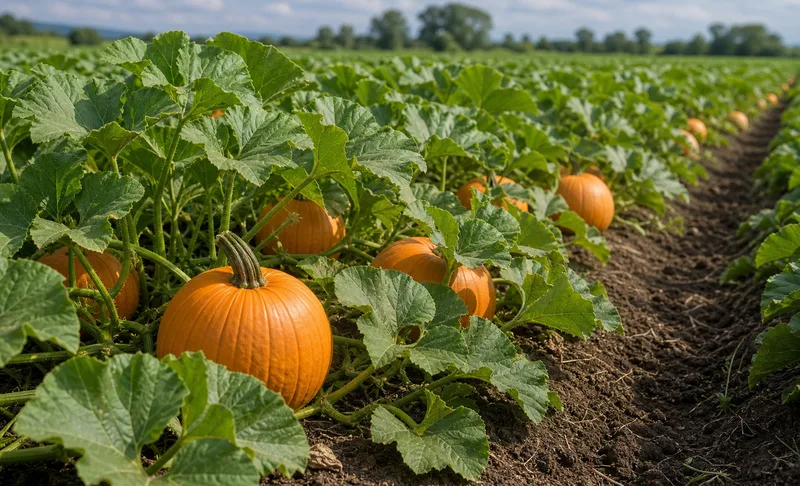
Resting fruit is different from constantly turning it
The underside of a pumpkin is easy to forget. Wet soil, heavy weeds, and poor airflow under the fruit can leave the resting side uneven. A simple dry support can help, but that does not mean the fruit should be handled every day.
The best support is dry, steady, and unlikely to hold water. Work with the direction of the vine instead of twisting the stem. If the underside needs checking, do it gently and only when useful. The goal is to reduce long wet contact, not to force every pumpkin into a perfect display shape.
Size is not the only maturity signal
A pumpkin that has reached a good size is not automatically mature. For fully mature fruit, check skin firmness, stem drying, surface color, and intended use together. Young pumpkins and storage pumpkins should not be harvested by the same standard.
This is similar to melon maturity checks before harvest, though the signals are different. Melons lean more on aroma and eating quality, while pumpkins need closer attention to skin, stem, underside condition, and post-harvest handling.
Reduce disturbance near harvest
In the final days before harvest, the field needs steady checking more than heavy cleanup. Pulling vines, turning fruit aggressively, or stepping through tight rows can damage fruit that is nearly ready and can stress vines that are already carrying weight.
It often helps to split harvest into practical batches. Clearly mature fruit can come first, while younger fruit or fruit for a different use can wait. After harvest, a short rest in a shaded, airy place makes sorting by size, surface quality, and intended use much easier.
Keep notes on fruit-position problems. Record where fruit sat on wet soil, where airflow was poor, and where maturity lagged. The value of late pumpkin management is not only this harvest. It helps next season’s vine direction, fruit selection, and walkway planning start earlier.