You open a corn ear and find rows of kernels interrupted by bare cob. It is tempting to name one culprit at once: no pollen. But an empty place can reflect two different events. A silk may never have received viable pollen, or a kernel may have begun developing and then stopped during early grain fill.
That distinction matters because a completed ear cannot be repaired. What you can do is read the pattern, compare several plants, and make a better decision for the next planting. This guide is about that diagnosis, not a replacement for the site's separate articles on establishment, pre-tassel water management or harvest timing.
Map the gaps before you blame the weather
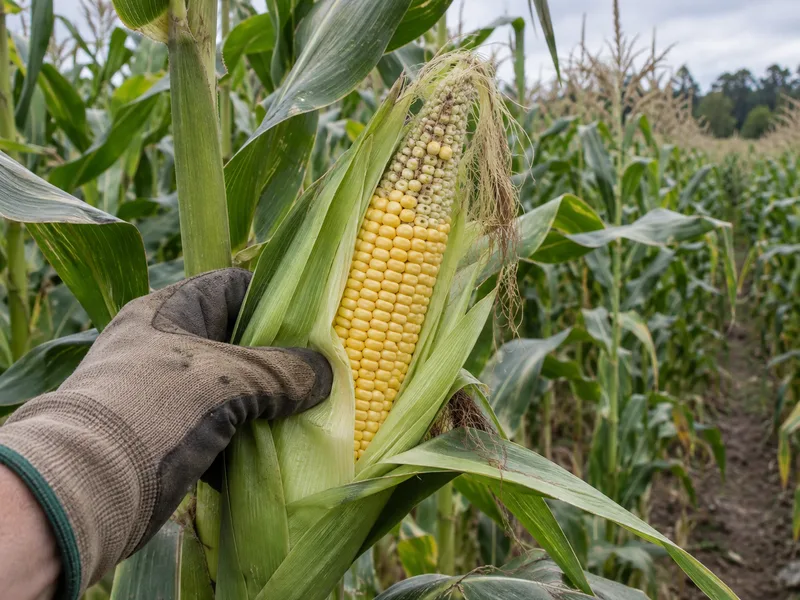
Take several ears from different parts of the planting, not only the most damaged one at the field edge. Mark where each plant stood: an exposed edge, a dry rise, a compacted patch, or a representative interior row. Open the husks gently and note whether kernels are missing at the tip, in scattered patches, down one side or along much of the ear. Photograph each ear beside its plant position if the pattern is hard to remember.
Do not make “bare tip” a complete diagnosis. Iowa State's ear-assessment discussion shows that missing kernels can occur in several places and under several combinations of stress. A small, consistent unfilled tip is not the same observation as broad blank patches across an ear. Also distinguish a completely vacant kernel position from a tiny, shrunken kernel still attached to the cob.
Ask one question before collecting more theories: did the blank positions ever start becoming kernels? That is not always possible to prove from a single mature ear. Nearby ears at an earlier stage, notes from silking, and the shape of any aborted kernels are useful additional evidence.
When pollen and silks did not meet
Each potential corn kernel is connected to its own silk. A receptive silk must meet viable pollen for that kernel to form. In small sweet-corn gardens, a long single row makes pollen capture less reliable than a block of several shorter rows; Iowa State's home-garden guidance recommends blocks of four or more short rows. That layout advice is for future sowing, not a remedy after the ears have filled.
Timing can fail even when tassels look abundant. Dry soil around flowering can delay silk emergence while pollen shed continues, leaving the two windows out of step. The University of Minnesota's pollination analysis explains this mechanism and why water stress may matter more than a hot afternoon by itself. Nearby corn can also supply pollen; absence of pollen on one tassel does not, by itself, prove a whole planting lacked pollen.
If you are inspecting a plant soon after pollination, silks still attached to the undeveloped ovules can support a failed-fertilization interpretation. Iowa State describes a careful shake test for this stage. It is a timing-sensitive check, not a way to diagnose an old dry ear months later. Record when tassels shed and when the first silks appeared next season; that observation is more valuable than remembering only that “it was hot.”
When kernels began, then stopped
Sometimes a kernel is present but remains small, pale or shrivelled, especially near the tip. That may indicate abortion after fertilization rather than missing pollen in the first place. Iowa State's drought and grain-fill review notes that tip kernels can be lost during the weeks after pollination. A photograph of the final ear alone rarely tells you precisely which stressful day caused it.
Look back at the root zone and weather during silking and the following early fill period. Was the soil dry beneath a superficially damp surface? Did plants on the shallow or compacted part of the plot struggle more than those in deeper soil? Were leaves rolling repeatedly during the day and recovering at night, or failing to recover? These comparisons give a stronger explanation than assuming the entire planting needs a particular fertiliser.
Do not mistake one damaged ear for a field-wide input deficiency. The cleaned source material lists soil, moisture, nutrition and weather as possible contributors, but its universal fertiliser rates and automatic hand-pollination prescription are not supported for every soil, crop or region. For prevention before the next flowering period, the site's corn root-zone and pre-tassel guide explains why a timely soil check matters more than applying a product after the gaps appear.
What can still change this season?
If ears are already in grain fill, missing kernels will not return. Keep the remaining crop from additional stress where practical: check whether irrigation water is reaching the root zone, avoid unnecessary disturbance, and judge the harvest using the kernels that actually developed. A response should match the current stage; do not perform a dramatic “rescue pollination” on an ear whose silks are no longer receptive.
If pollination is still happening in a small planting, inspect open silks and active pollen shed before deciding whether any intervention is worthwhile. In a larger field, look for a repeated pattern across representative areas and seek local agronomic advice before changing management. The point is not that hand pollination can never help; it is that it only makes sense while receptive silks and viable pollen coincide, and it cannot reverse an already aborted kernel.
For the next crop, keep the record simple: planting layout and variety, the dates tassels and silks first appeared, soil moisture during that window, and a few labelled ear photos from different parts of the plot. If the main question instead becomes when the surviving kernels are mature enough to pick, use the separate corn harvest-timing article. Today, the useful outcome is an honest diagnosis: no pollen, early kernel loss, or uncertainty that needs better observations next time.