Peanuts can be hard to read near harvest because the useful crop is below the soil surface. Green leaves do not always mean the pods need more time, and yellowing leaves do not always mean the whole field is ready. The better decision comes from pod sampling, soil condition, careful lifting, and drying the crop before sorting.
This article follows the earlier peanut guide on pegging space and soil condition. Once harvest approaches, the question changes from how the canopy looks to how evenly the pods have matured underground.
Pull sample plants before deciding
Before harvest, pull sample plants from several parts of the field: edge, center, loose soil, tighter soil, and any known weak patch. Check pod size, shell texture, peg attachment, empty pods, and how mature pods are distributed on the plant. Leaf color alone can hide early and late zones inside the same field.
Do not sample only the best-looking area. Weak rows, lower spots, and ridges that lost shape often show the real harvest risk more clearly than the strongest plants.
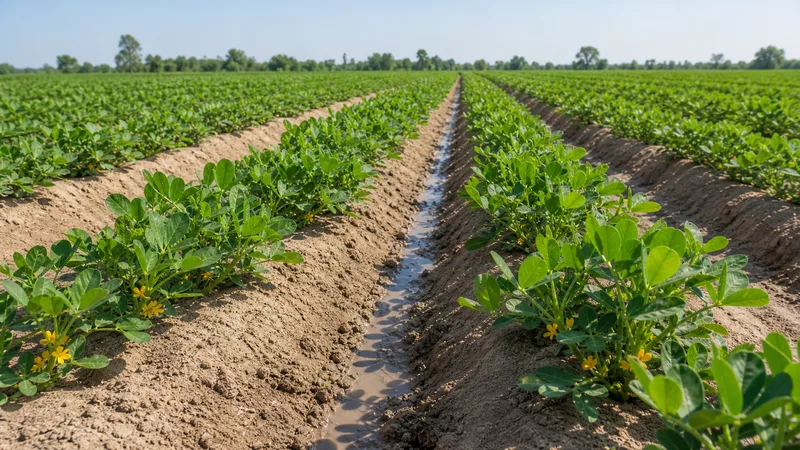
Soil condition affects lifting losses
If the soil is too wet at lifting, heavy soil sticks to pods and slows drying. If it is too dry and hard, pegs and pods are easier to break. A better window is when the soil loosens around the plant and pods can come out without carrying a heavy wet layer.
The same field-zone thinking appears in soybean maturity and dry-down checks. The crops are different, but both need more than one distant color signal before a whole field is harvested.
Dry the crop before piling it thick
After lifting, peanuts should not be packed into a heavy wet pile right away. That may save space for a moment, but it slows moisture movement and makes later sorting harder. In small harvests, spreading plants and pods first gives surface moisture time to leave.
Drying is not only about making the crop hot as quickly as possible. Strong sun, changing weather, and damp piles all need attention. This is close to the logic in onion curing and sorting after harvest: moisture needs to leave steadily before storage quality can be judged.
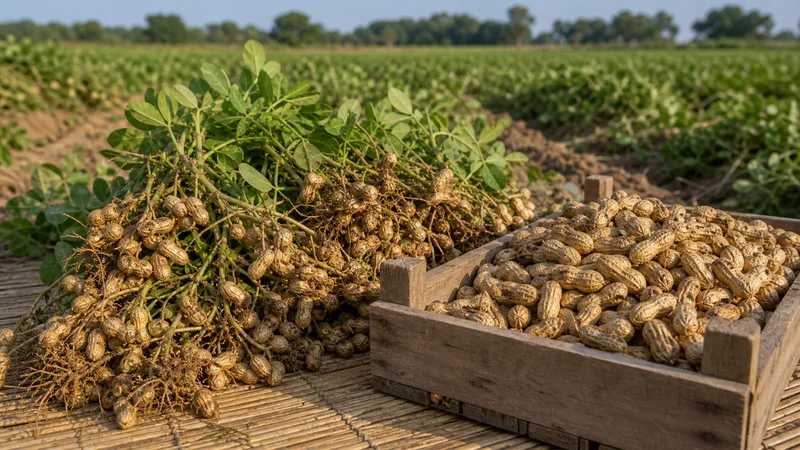
Sort weak pods before storage
Once peanuts are dry enough to handle, separate broken pods, empty pods, immature pods, heavy soil clumps, and uneven batches. They should not be stored together with the best portion of the crop. More uniform, dry, mature pods are better candidates for longer holding or later processing.
The most useful harvest note is not only the date. Record where maturity came early, where lifting caused more pod loss, and where drying was slow. Those details point back to ridge shape, soil looseness, and water management decisions for the next season.