Once soybean leaves begin to fade, it is tempting to treat the field as nearly finished. But yellowing leaves do not always mean the pods have matured evenly. The better harvest decision comes from checking pod fill, dry-down speed, lodging risk, and the differences between field zones.
This guide follows naturally after the basic stand and pod-layer checks in soybean growing management. If emergence or pod set was uneven earlier, the last stage needs closer sampling rather than one quick look from the field edge.
Pod fill matters more than leaf color alone
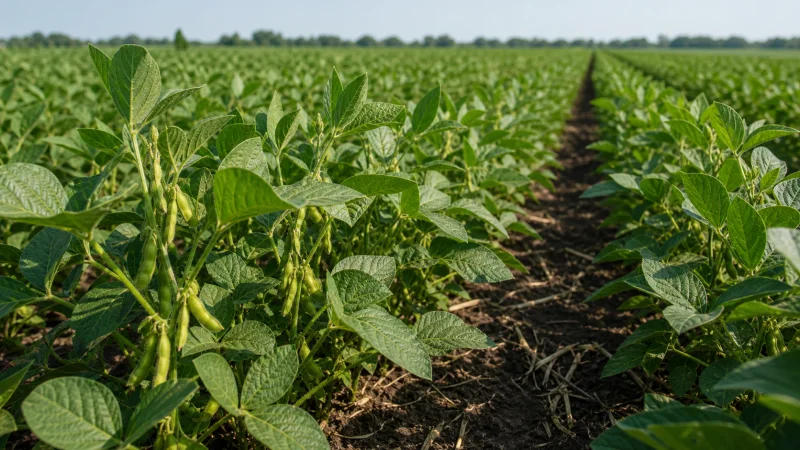
During pod fill, the crop should be judged by more than canopy color. Pull sample plants from several parts of the field and compare lower, middle, and upper pods. Look for filled seeds, consistent pod height, and whether flat pods or small pods are concentrated in one area.
If the upper canopy looks productive but lower pods are weak, the field may be carrying earlier problems from density, light, or moisture. That kind of crop should not be judged from a single viewpoint, because maturity differences can be much larger inside the field than they look from a distance.
Moisture swings can make maturity uneven
From flowering through pod fill, soybean fields react strongly to soil moisture swings. Long dry periods can slow seed fill, while wet low spots may keep the root zone short of air. Both patterns can make one part of the field dry down ahead of another.
The logic is close to late rice water and harvest timing: the last stage is not about keeping the field as wet as possible or drying it as early as possible. The crop needs enough support to finish grain or seed fill, followed by a steady move toward harvest readiness.
Lodging can narrow the harvest window
When soybean stands are too dense, stems are weak, or airflow is poor, the weight of filled pods can push the crop toward lodging. Lodging does more than slow harvest. Pods close to the ground often dry unevenly, receive less light, and are harder to bring in cleanly.
Any lodged or leaning area should be checked separately. It may not mature on the same schedule as the better-standing part of the field. A similar late-season warning appears in wheat grain fill and lodging checks, where the crop can look close to harvest while support problems are still changing the final result.
Sample field zones before choosing the harvest date
Before harvest, separate the field into practical zones: edge, center, higher ground, lower ground, and any known weak patch. Check pod color, seed firmness, leaf drop, and stem dry-down in each area. If one zone still has many green pods, decide whether it is an isolated delay or a sign that the whole field needs more time.
Harvesting too early can leave seed moisture and maturity less stable. Waiting too long can expose the crop to rain, lodging, or overly dry pods. A better decision turns “it looks almost ready” into several field checks that can actually be compared.
The most useful record is tied to field position. Note where pod fill lagged, where plants lodged first, and where dry-down was slow. Those notes are more valuable next season than a harvest date by itself, because they point back to density, drainage, and field management decisions.