At flowering and pod setting, soybeans are easy to misread. A field can look green and active, yet still be losing flowers, setting weak pods, or carrying too much leaf growth for the lower canopy to breathe. This stage needs water, drainage, stand strength, and canopy structure judged together.
If the stand was uneven earlier, the field is already carrying that history. The basic checks in the soybean stand and pod-layer guide still matter here, because flowering does not erase weak zones or delayed emergence.
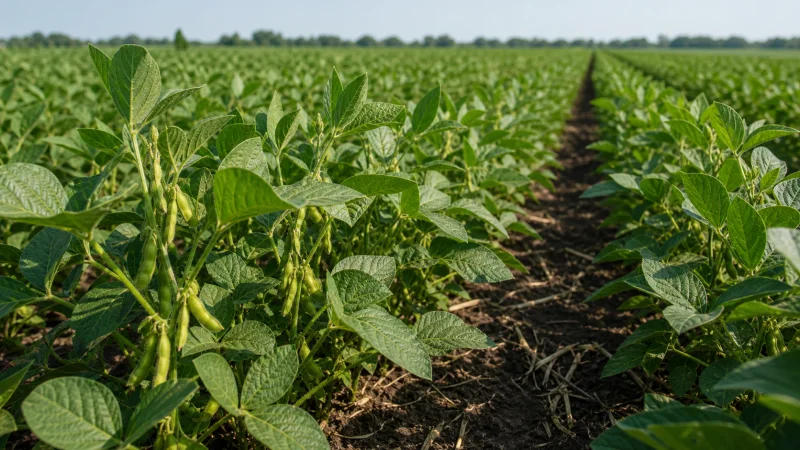
Many flowers do not guarantee steady pods
During flowering, the plant is supporting leaves, stems, roots, new flowers, and young pods at the same time. If soil moisture swings sharply, or if the canopy is too dense and shaded underneath, visible flowering can still turn into flower drop, pod drop, or small pods that never fill well.
Do not judge only from the field edge. Walk into the rows and compare middle nodes, lower canopy light, damp low areas, and dry higher ground. Those differences often explain pod set better than the overall field color.
Water should be steady, but drainage still matters
Soybeans need dependable moisture at flowering and pod setting, but dependable does not mean constantly wet. Long dry spells can reduce pod set and early seed development. Waterlogged soil can leave the root zone short of air, slow recovery, and increase the chance of pod loss or early decline.
The practical decision is to think about irrigation and drainage as one system. If the surface is drying, plants wilt at midday, and no useful rain is coming, the crop may need water. After heavy rain, open drainage and root recovery matter before any attempt to push growth harder.
Weak zones and rank growth need different responses
A weak patch and an overgrown patch should not receive the same treatment. Pale, short, thin plants may need gentle support to keep flowers and small pods. A dense, dark, closed canopy may need restraint, because pushing more growth can raise lodging risk and reduce airflow.
The same field logic appears in peanut flowering and pegging management. In both crops, strong leaves are not the whole story. The lower plant, root zone, and developing pods have to be checked before deciding what the crop needs next.
A heavy canopy hides lower-node problems
Once soybean rows close, a field can look uniform from a distance while the lower canopy is already struggling. If leaves stay packed together, stems become thin, and air movement is poor, later lodging and uneven maturity become more likely.
At pod setting, check the lower and middle nodes. Are pods starting across several nodes, or only near the top? Are stems strong enough to carry a heavier pod load? Is the row base damp and shaded for long periods? Those signals are more useful than plant height alone.
Connect pod setting to the next field check
Flowering and pod setting should create notes for the next stage. Mark where the crop dried first, where water stood after rain, where plants were too lush, and where weak rows lagged. Those places are the ones to sample again when seeds begin to fill.
The follow-up is the soybean pod fill and harvest-window check. If water rhythm and canopy balance are handled now, pod fill becomes a field decision instead of a late-season guessing exercise.