A new leaf on a fig cutting is easy to notice. It is also easy to give that one leaf too much meaning. When several cuttings share a bench, the more useful picture is the group: which pots are beginning to look active, which are still quiet, and how the differences stay visible over more than one visit.
This is not a contest to decide which cutting is best. It is a way to make observation less reactive, especially while the most important growth is still out of sight below the pot surface.
Start with the whole bench
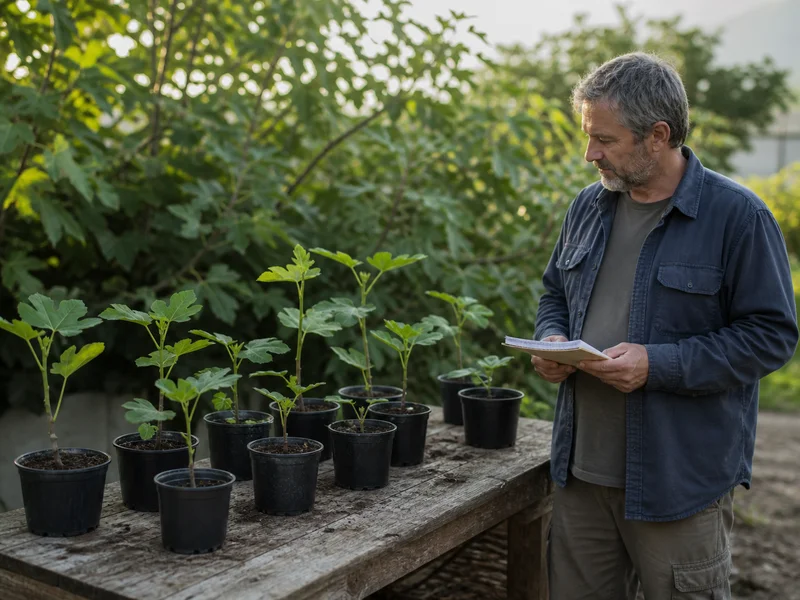
Before picking up a pot, step back far enough to see the set together. A bench view can show that one cutting is taller, another is holding only a small leaf, and another has not changed much. Those differences are easier to remember when they are seen in relation to the same light, the same pot size, and the same working space.
One green shoot can be encouraging without becoming a verdict on the whole bench. The group gives each small change a place.
Let a simple note do the remembering
A notebook beside the pots is useful because it slows the next look down. Record only what can be seen without disturbing the cutting: a fresh leaf, a stem that has extended, a pot that still looks unchanged, or a question to revisit. A short date and a clear pot position are more useful than trying to write a diagnosis from one glance.
There is no need to expose or handle the root area merely to satisfy curiosity. A repeated note makes time part of the observation, and time often gives a clearer answer than a single close inspection.
Give the quieter pots a place in the picture
The least dramatic pot is often the easiest one to ignore. Keep it in the same row and include it in the same return visit. This does not assume that all cuttings should progress at the same pace. It simply prevents one early leaf from becoming the only story told by the bench.
Four questions for the next look
- Can each pot still be identified from its position without moving it around?
- Which changes can be described plainly, without guessing at a cause?
- Is the same pot still quiet on the next visit, or has the comparison changed?
- Does the bench make it easy to look first and intervene later?
A fig cutting bench becomes more useful when it is treated as a small record of different beginnings. The fresh leaves matter, but the pattern across the group is what turns them into something worth watching.