A young walnut graft can look vigorous from a distance once a new shoot appears. The more useful view is closer: the union, the wrap or support around it, and the way the new shoot is carrying itself. These parts should be read together before anything is tightened, removed, or redirected.
Begin with the union, not the tallest shoot
A strong shoot is encouraging, but it does not replace a calm check of the graft union. Look for a clean, settled interface and for materials that are still doing their job without pressing into expanding bark. Touch only as much as needed to understand the condition.
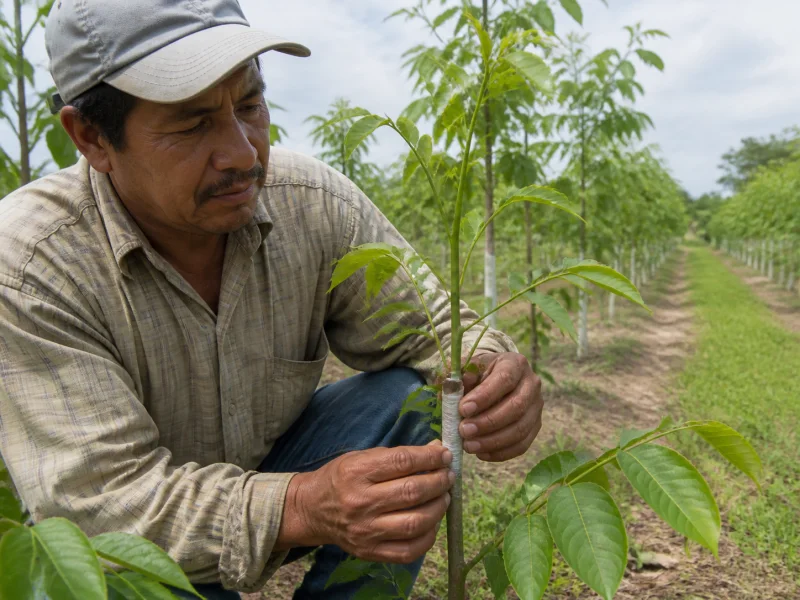
Let one clear shoot tell the story
When several small shoots compete near a young graft, it is tempting to correct everything at once. Instead, observe which shoot is developing as the intended continuation and whether the rest of the tree can be left stable for the next check. The best choice is often easier to see across more than one visit.
Keep a reference for the next visit
Use the same side of the tree and the same viewing height when you return. Compare the union, the bark immediately above and below it, and the direction of the shoot. This makes real change easier to separate from a different angle or an unnecessary adjustment.
- Check the graft union before focusing on shoot length.
- Keep wraps and supports observable rather than hidden.
- Compare the same point on more than one visit.
- Do not force a young shoot into a new direction for appearance alone.
For a young walnut, a patient observation routine protects the part of the tree that must become reliable before it becomes impressive.