A mango orchard does not move through the year as one neat calendar page. One block may be carrying fruit while another is showing a new flush; a young tree can be building its shape while an older tree is being read for the next decision. When every observation is filed only under a month, the detail that matters most can disappear: what this tree was doing when you last stood beside it.
A useful orchard note is not a production diary and it does not need to predict the whole season. It is a small record that helps a grower return to the right question. The notes can be brief, but they work best when they follow a tree, a row, or a clearly marked part of the orchard instead of trying to make every tree fit the same timetable.
A month is only a reminder to look
Seasonal calendars are helpful for remembering that an orchard will change, but a calendar alone cannot tell you whether a particular tree is ready for the next operation. A dry spell, a late flush, uneven vigour, or a different crop load can shift the useful moment from one part of an orchard to another. Start with the tree in front of you: what is visible now, and what changed since the last visit?
Write that answer in ordinary language. “New shoots on the south side, fruit still hanging low” is more valuable than a vague note saying that the block was checked. It gives the next visit a comparison point. It also prevents a familiar month from becoming a reason to repeat work that the tree does not yet need.
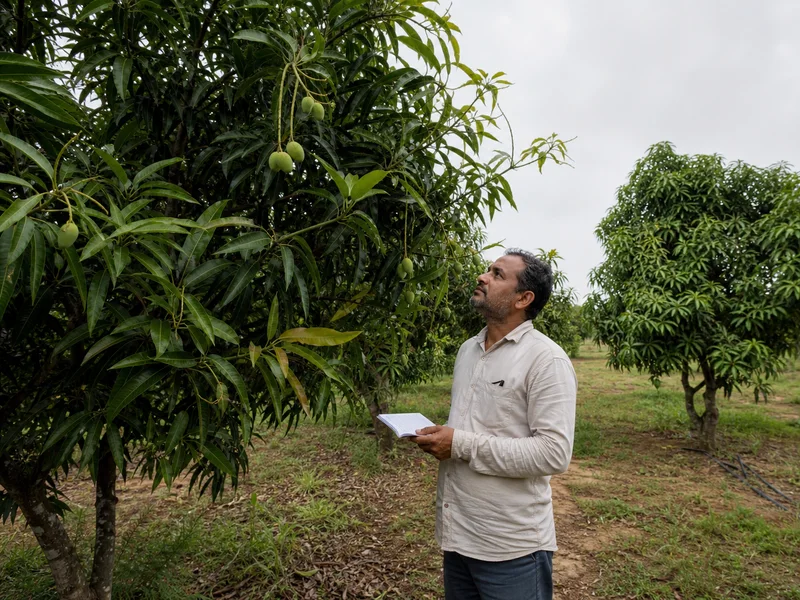
Give each observation a location and a consequence
Good notes have two parts. First, state where the observation belongs: a tree number, a row end, the wetter side of a block, or a young replacement tree. Then add why it matters: a branch is beginning to crowd an access lane, a strong flush is appearing after a quiet period, or fruit is making one side of the canopy harder to see through.
This does not mean every difference requires an immediate correction. A note can simply hold a question open for the next walk. In a pomegranate orchard walk, for example, the useful first step is to compare the trees and crop load before reaching for a uniform response. Mango trees benefit from the same patience: record the pattern first, then decide whether it is stable, spreading, or only local.
Keep new growth, fruit, and pruning as separate observations
One common way to lose clarity is to write “tree looks good” after seeing several different things at once. New growth, developing fruit, and branch structure may be connected, but they are not the same observation. Give each one its own line in the notes. This makes it easier to avoid treating vigorous leaves as proof that fruiting space, support, or light distribution are equally satisfactory.
Pruning decisions become calmer when they are tied to a visible purpose. Rather than writing “prune next visit,” note what needs to remain open: a route along the tree, a view into a fruiting area, or a branch that is beginning to cross a working space. The question is similar to the one in this cherry canopy light guide: a full canopy can look productive while still making later inspection and harvest harder.
End each note with one question for the return visit
Before leaving a tree, write one question that the next visit can answer. It might be “did the new flush spread beyond this side?”, “is the same branch still blocking the path?”, or “did the fruiting area remain easy to inspect?” A question is better than a generic task list because it asks you to look again before acting.
Over a season, a handful of short notes can show an orchard's real rhythm more clearly than a long list of routine jobs. They reveal whether the same issue keeps returning, whether one zone behaves differently, and whether a previous adjustment actually changed the picture. That is enough to make the next decision more specific without pretending that every mango tree should follow the same script.