On a loquat tree, the first branch that catches the eye is rarely the whole story. One cluster may sit in open light, another may be tucked behind broad leaves, and a third may be easy to reach only from the far side of the trunk. A useful orchard walk begins by accepting that these are different places on the same tree, not variations of one identical task.
This note follows a slower visit with an empty basket. The purpose is not to rush toward a picking decision. It is to learn which branch can be found again, which fruit cluster needs a second look, and where the tree is asking the walker to change position before making assumptions.
Choose one branch as a return point
Start with a branch that is visible from the path and comfortable to approach without leaning through the whole canopy. Notice where its cluster sits relative to the leaves, how the branch meets the main structure, and what the ground below it is like. These simple landmarks make a later visit more specific than remembering that the tree "looked full."
Then move around the tree. A cluster on the opposite side is not a duplicate of the first one merely because the fruit belongs to the same tree. The amount of leaf cover, the direction of the branch, and the space available to stand can change what a gardener is able to see. Reading several small scenes is more honest than trying to read the entire canopy in one glance.
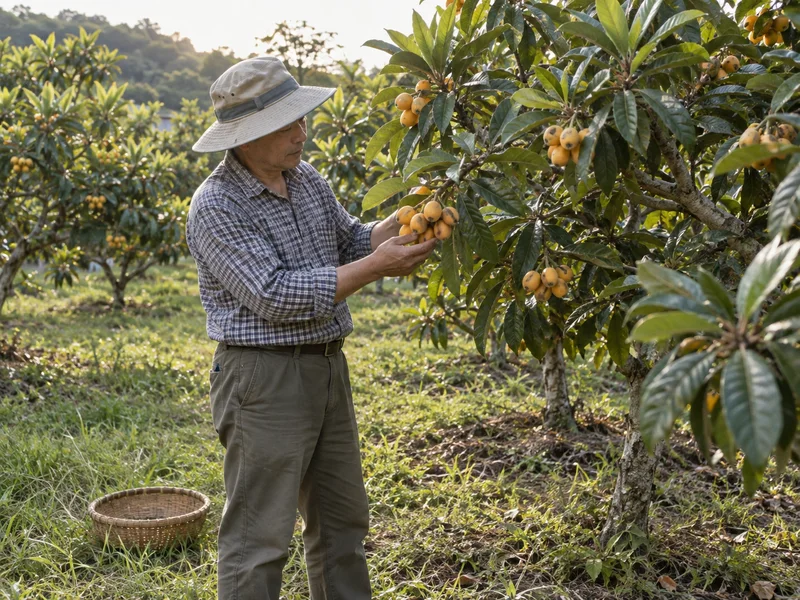
Let the basket wait while the tree becomes legible
An empty basket is useful because it removes the pressure to treat every close look as the beginning of harvest. It gives a gardener time to see whether fruit clusters are distributed across the tree, where the lower branches remain accessible, and which areas would be difficult to revisit once the first convenient fruit is removed.
This is not an argument for leaving a tree untouched. It is a way to make the eventual work less accidental. The pomegranate orchard walk uses the same idea from another fruit tree: a return route can reveal more than a single impressive patch of fruit.
Keep a tree-sized record, not a universal rule
After the walk, a note can stay very short: the side of the tree that was read, the branch used as a return point, and one question worth bringing back. That record belongs to this tree and this visit. It does not need to become a rigid calendar or a claim about every loquat orchard.
Orchard trees often reward that scale of attention. In the mango tree observation note, the focus is also on following a particular tree through changing questions rather than forcing the whole block into one generic instruction. A loquat tree can be approached the same way: look closely enough to know what you saw, then leave room for the next visit to add something real.
Why the branch matters after the walk
A branch that can be relocated gives future work a point of reference. It helps a gardener separate what has changed from what was only overlooked, and it keeps the orchard from being managed by the memory of its brightest fruit cluster. The payoff is modest but practical: a tree that remains readable, and decisions that stay connected to a place you can actually return to.