Bitter melon plants can flower heavily and still set very little fruit. The reason is rarely one single problem. Female flowers may be late, vines may be too vigorous, the trellis may be too dense, pollination may be poor during wet weather, or water and fertilizer may be pushing leaves before fruit can follow.
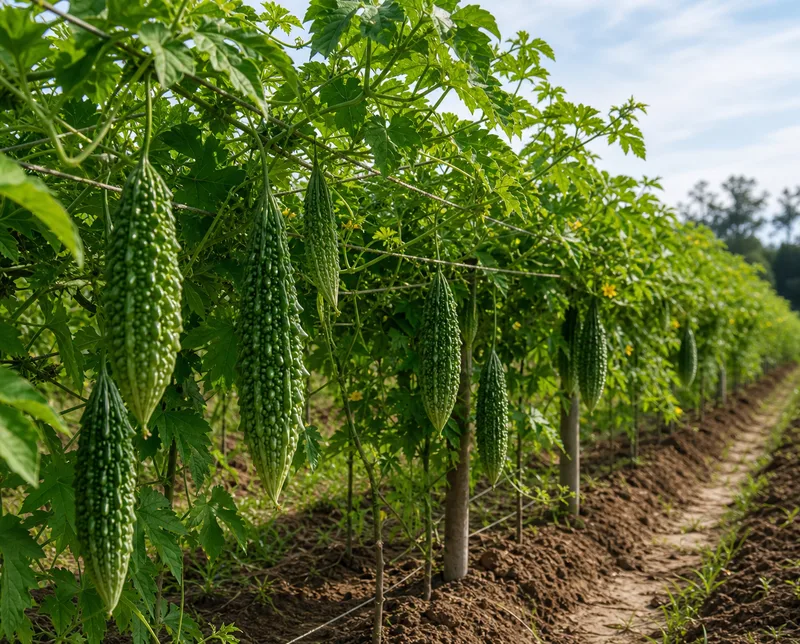
The main bitter melon growing guide covers trellis space, root moisture, airflow, and harvest access. The bitter melon trellis guide focuses on keeping the canopy open after vines climb. This article looks at flowering and fruit set: how female flowers, pollen, vine vigor, water, and harvest rhythm need to line up.
First check whether female flowers are present
Bitter melon produces separate male and female flowers on the same plant. Male flowers often appear first, so a plant can look full of bloom before it is actually ready to carry fruit. Look for flowers with a small fruit shape behind the petals, not only for the number of blossoms.
If female flowers are scarce, look back at the seedling and early vine stage. Too much nitrogen, high heat, poor light, or overly tight spacing can push vine growth while delaying fruiting balance. Adding more fertilizer at that moment may only make the leaf canopy stronger.
Hand pollination works best while pollen is fresh
Rainy weather, low insect activity, and weak pollen movement can leave bitter melon with flowers but no fruit. In small plantings, hand pollination is a useful backup. Work in the morning when flowers are fresh, using a male flower from the same day to touch pollen onto the stigma of an open female flower.
Pollination is not only about touching two flowers together. Flower condition, humidity, and temperature all affect the result. During long wet spells, improving airflow and light around the trellis may help more than simply repeating the same pollination step.
When vines are too strong, redirect the plant
Bitter melon branches quickly. If lower side shoots crowd the trellis, the canopy becomes thick before fruiting is steady. Remove weak or crowded lower shoots in stages so the main vine, useful side shoots, and female flowers receive more support.
Once fruit has set on a side shoot, keep enough functional leaves above it, then prevent that shoot from running too far. The goal is not a bare vine; it is a readable vine. The same principle appears in the pumpkin side-shoot and fruit-set guide: pruning should clarify fruiting positions, not strip the plant.
Water and feeding should change after fruit set
Before flowering, too much water and nitrogen can encourage soft, leafy growth. The early goal is a root system that can support flowering without driving the vine out of balance. Keep soil from drying hard, but avoid keeping it constantly wet.
After pollination succeeds and young fruit begin to expand, the crop needs steadier water and nutrition. High heat can dry the root zone quickly, while heavy rain can leave shallow roots short of air. The right rhythm depends on vine strength, weather, drainage, and how many fruit are being carried.
Do not let the first fruit stay too long
Bitter melon is normally harvested as a tender fruit. If early fruit are left on the vine too long, they keep drawing resources and can slow the next flush of flowers and young fruit. Watch shoulder shape, surface gloss, color, and fruit size, then harvest in batches before fruit become overmature.
During a strong picking period, checking the trellis more often is part of crop management. Hidden old fruit are not only a market-quality issue; they also affect the plant's next fruiting cycle. This is similar to the cucumber harvest rhythm guide, where picking frequency helps keep production moving.
How this differs from the trellis guide
If your main problem is hidden fruit, blocked paths, and poor airflow, start with the bitter melon trellis airflow guide. If the plant flowers but fruit set remains weak, use this article to check female flowers, pollination, vine vigor, water rhythm, and early harvest timing.
Bitter melon fruit set is not just waiting for flowers to become fruit. The vine must stop competing with itself, pollen must reach the right flowers, the root zone must stay moist without being waterlogged, and the first fruit must be picked before they slow the next set.