Summer lettuce can lose quality after it leaves the field. A head or leaf bunch may look good at harvest, then wilt, yellow, brown, or rot after a few hours of waiting, packing, and transport. The problem is not only how the crop was grown; harvest timing and cooling decide a large part of the final quality.
The main lettuce growing guide covers sowing intervals, shade, moisture, and harvest windows. This article starts after harvest and works backward: when to cut, which weather to avoid, how to cool the crop, and how to package it so summer heat does not erase field quality.
Summer lettuce needs an earlier maturity call
In hot weather, lettuce grows quickly and becomes risky quickly. Heading lettuce harvested too late can crack, split, or become less tolerant of storage and transport. Lettuce for fresh-cut use, delivery, or short cold storage often needs to be harvested before it reaches maximum size.
Loose-leaf lettuce gives more flexibility, but it still should not be left until leaves are coarse, bitter, or beginning to bolt. Match harvest maturity to the sales channel: nearby same-day sale can be later, while food service, fresh-cut, or longer delivery needs a steadier, slightly earlier cut.
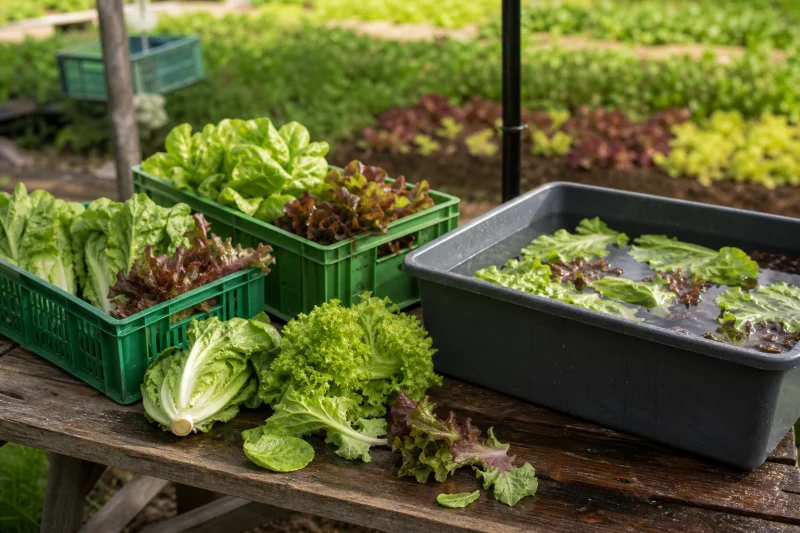
The harvest hour shapes everything after it
Summer lettuce should not sit through midday heat if it can be avoided. Night harvest or early morning harvest after dew has dried keeps the crop cooler and easier to handle. Harvesting right after rain is risky because leaves carry more surface water, soil splash, and microbial pressure.
If rain is expected and supply must continue, it may be better to harvest part of the crop ahead of the weather and move it into cold storage. This planning is easy to overlook, but it often determines whether summer lettuce arrives crisp or tired.
Preharvest water control is not drought stress
Lettuce should be harvested with the right amount of moisture in the plant and on the leaf surface. Too little water leaves the crop limp; too much water makes it easier to bruise, rot, and brown after packing. Preharvest water control means avoiding a soaked crop, not drying the plants out.
If leaves must be washed because of soil or mud, surface water should be removed quickly with airflow. Wet leaves packed directly into bags, boxes, or deep stacks create warm, humid pockets that are difficult to fix later.
Cooling should start before the crop looks tired
Freshly cut summer lettuce carries field heat. If it waits beside the field, near a truck, or in a packing area, leaves lose water and cut surfaces brown faster. Cold rooms, forced-air cooling, vacuum cooling, or ice packs all serve the same purpose: remove heat before the crop declines.
When a full cold chain is not available, basic discipline still matters: shade the crop, keep air moving, avoid tall stacks, and do not load warm lettuce into a truck that has not been cooled. A refrigerated truck should be cold before loading, not after the crop is already inside.
Packaging should follow the market route
Lettuce packaging is not one-size-fits-all. Film wrap, bags, boxes, and reusable crates each protect the crop differently. Loose leaves are easily crushed; heading lettuce can trap heat or split; fresh-cut buyers need cleaner and more uniform maturity.
Trim yellow, old, broken, or muddy leaves, but do not over-trim the crop if outer leaves can protect the head during short transport. This is similar to the logic in the onion curing and storage guide: postharvest handling is not an extra task; it is part of quality control.
How this differs from the growing guide
If the crop is bolting, spaced too tightly, short of shade, or uneven in the bed, start with the lettuce growing guide. If the crop looks acceptable in the field but wilts, yellows, browns, or loses value after harvest, use this guide to check harvest timing, cooling, moisture, and packaging.
Summer lettuce is not finished when it is cut. A usable harvest plan includes maturity, a cooler harvest hour, dry leaf surfaces, quick cooling, and packaging that matches how the crop will be sold.