Oyster mushrooms are easiest to handle before a cluster loses its compact shape. When the larger caps have opened enough to show their size but the edges are not yet flat and turned upward, the cluster is usually still easy to lift, sort, and carry as one piece. Waiting for every cap to reach the same size can turn a clean harvest into a collection of loose, fragile mushrooms.
The useful decision is made by looking at the cluster, not by counting days. Temperature, strain, airflow, and the position of a bag on the shelf all change the pace. A short, regular walk through the room makes it easier to catch clusters in their workable window.
Read the largest caps, then look back at the whole cluster
Start with the most developed caps in a cluster. Their edges will begin to relax as the mushrooms mature, but a cluster is usually easier to manage before those edges flatten broadly or lift. Then step back and check the smaller mushrooms around them. If most of the cluster is developed enough to use while the group still holds together, it is a better candidate for harvest than a single oversized cap left to dominate the shelf.
Do not chase identical size. Oyster mushrooms in one cluster naturally develop at slightly different speeds. The aim is a useful harvest window that protects the condition of the majority, not a perfect visual match among every cap.
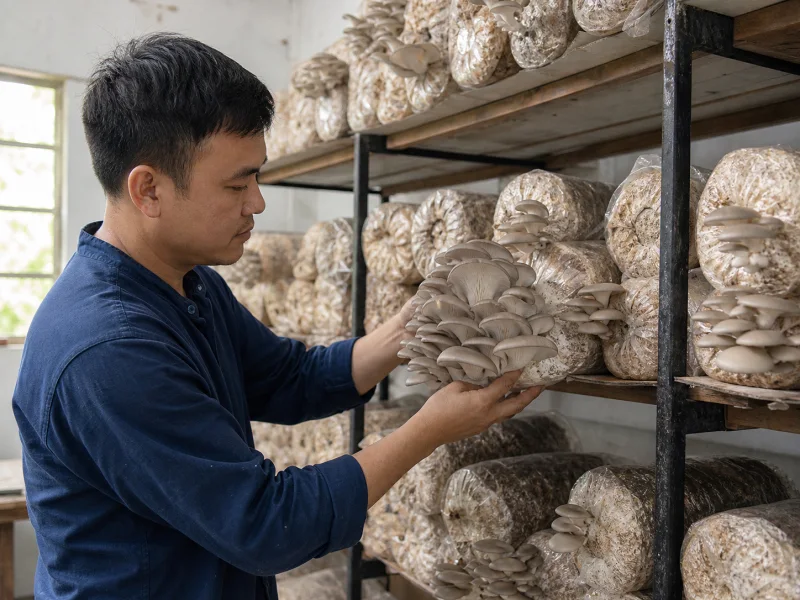
Lift at the base instead of pulling individual caps
Use clean hands and support the cluster close to its base. A gentle twist-and-lift action, suited to the growing system, helps remove the cluster without pulling apart individual caps or tearing at the bag opening. If a cluster does not release cleanly, stop and check where it is attached rather than using force.
Handling caps one by one makes the work slower and can leave damaged pieces behind. A whole cluster is easier to place in a clean container and easier to inspect for damaged or overly mature pieces after it is off the shelf.
Reset the growing surface with a light hand
After a cluster is removed, look at the opening and surrounding surface. Clear loose stem remnants or debris that would interfere with the next growth, but do not dig into the substrate or enlarge the opening just to make it look neat. The goal is to leave a clean, undisturbed place for the next flush to form.
Keep the work area and containers clean as you move through the room. A calm reset after each shelf section is more useful than returning later to a mix of old stems, loose caps, and uncertainty about which bags were already harvested.
Let the next flush set the pace of the next check
Once a section has been harvested, keep watching for new pins and small clusters instead of assuming the next round will appear on a fixed timetable. Compare bags on the same shelf and note which positions consistently develop faster or dry differently. These patterns can guide the next inspection route without turning every shelf into a separate schedule.
Moisture and fresh-air decisions should follow the actual growing system and local conditions. The harvest walk is a good time to notice changes, but it is not a reason to spray or adjust the room impulsively around every picked cluster.
Finish with a clean record of what changed
At the end of a pass, the room should be easier to read: mature clusters are out, the surfaces they left are clear, and the next developing groups are visible. If a shelf section was uneven, note it for the next check rather than trying to force all bags into the same stage at once.
That steady rhythm keeps harvest quality connected to the grow room itself. The best oyster mushroom harvest is not just a full basket; it is a clean handoff from one flush to the next.