Pumpkin vines can look productive long before the fruit load is actually under control. When every side shoot is allowed to run, leaves may fill the row while flowers and young fruit become harder to see. Pruning is not about making the plant look tidy. It is about keeping useful fruit positions visible, supplied, and reachable.
This article follows the broader pumpkin growing guide on vine direction and fruit position. Here the focus is narrower: side shoots, pinching, pollination, and fruit selection around the time fruit set begins. Once fruit is already sizing, the next step is closer to keeping pumpkins dry and checking maturity signals.
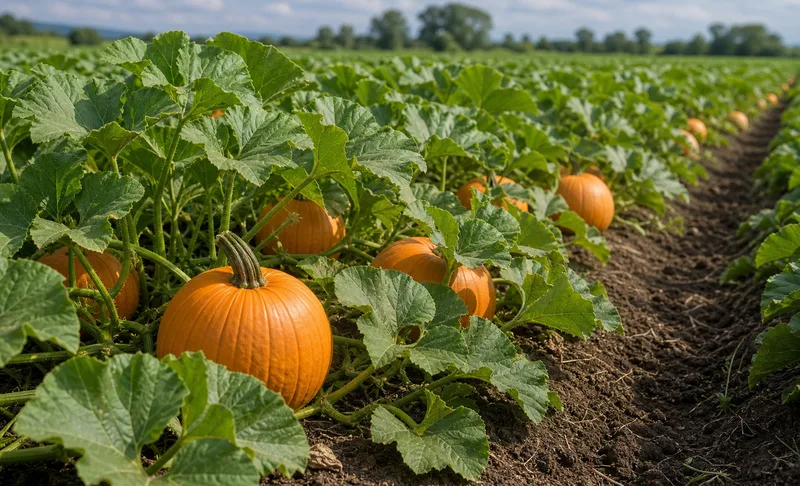
Read vine strength before deciding how many side shoots to keep
Pumpkins do not need the same pruning pattern in every field or garden. In rich soil with plenty of moisture, vines may grow so strongly that side shoots crowd each other and hide fruit positions. In weaker soil, removing too many shoots can reduce the plant’s ability to carry a useful crop.
Before cutting, look at the main vine, leaf size, internode length, and where female flowers are appearing. A vigorous plant may need earlier side-shoot control. A moderate plant may need one or two strong side shoots left in place so the crop is not forced onto a single weak line.
Pinching should move energy back toward fruit, not shock the plant
If a pumpkin vine keeps running without control, fruit set can be delayed or spread across awkward positions. Pinching a growing point after the vine has enough leaf area can slow extension growth and help supply flowers and young fruit. Done too early, it limits the leaf area that feeds the crop. Done too late, the row may already be crowded.
The useful moment is when flower positions are clear, the plant has enough leaves to support fruit, and you are ready to choose which fruit to keep. After pinching, keep checking the plant for several days. Young fruit still needs steady support from leaves, roots, and moisture.
Make flowers visible before pollination becomes urgent
Pumpkins depend on male and female flowers matching at the right time. When weather is wet, insects are limited, or the canopy is too dense, hand pollination can help. But pollination starts before touching a flower: the female flower must be easy to find, and nearby leaves should not hide it completely.
If flowers are buried, they are easy to miss during the short morning window when many growers check vines. After pollination, hidden fruit is also harder to track. The logic is similar to keeping bitter melon fruit visible on a trellis: what you cannot see in time is hard to manage well.
Fruit selection is about position and load, not just count
When vines are strong, several young pumpkins may set close together. Keeping every one can leave the plant carrying too much in the wrong places. Fruit selection should consider position, vine strength, nearby leaf area, and the final use of the crop. A fruit that sets early in a wet, hidden, or hard-to-reach position may not be the best one to keep.
Small pumpkin types can often carry more fruit than large types, but even then the plant has limits. Large pumpkins usually need fewer, better-placed fruit with enough leaf area around them. Fewer fruit is not automatically a loss. A crowded, uneven load is often the bigger problem.
Do not prune vines and then push growth too hard
After pruning or pinching, the plant begins reallocating growth. If nitrogen is pushed too hard or watering swings sharply, vines may resume leaf growth while fruit set remains weak. Around flowering and early fruit set, root-zone moisture should stay steady and feeding should match the plant’s actual condition.
Once one or two fruit are holding well, adjust feeding based on fruit sizing, leaf function, and soil moisture. Pumpkins need supply, but they also need rhythm. When vines, flowers, young fruit, and the root zone stay in balance, later fruit resting, maturity checks, and harvest batches become much easier.