Pumpkin vines can cover a surprising amount of ground, which makes fruit position and drainage decisions easy to postpone until they are difficult to change. The useful crop is one where fruit can be found, checked, and harvested without walking through wet foliage.
Give vines a direction before they spread
Guide early growth into a planned space so main vines do not cross paths randomly or block field access. Direction is easier to establish with small adjustments than after a dense mat has formed.
Follow a main vine from the crown. It should lead into a defined zone without being buried under neighboring vines or forced across a traffic lane.
Retain fruit where the plant can support it
Not every early fruit will finish well, particularly on weak or crowded vines. Favor fruit positions with active leaf area, room to expand, and a dry surface beneath them.
Check beneath each retained fruit. It should not rest in a water-collecting depression or directly against a stem that will rub as it enlarges.
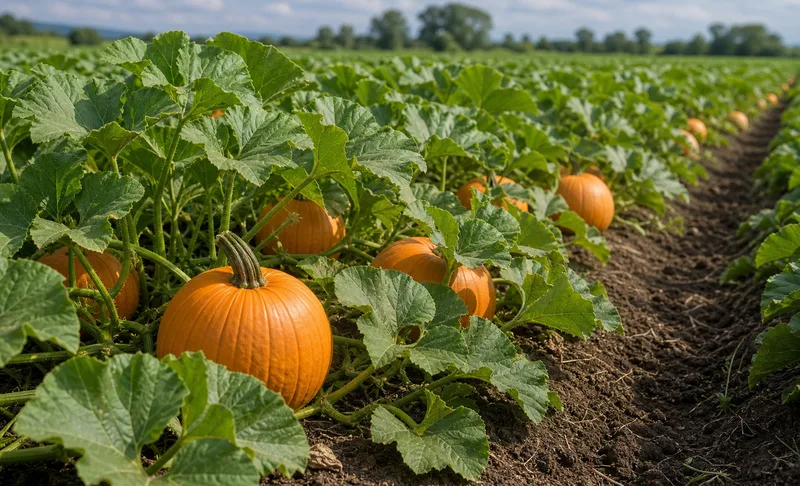
Protect the field surface from standing water
Pumpkin fruit and vines tolerate less repeated wet contact than they appear to. Drainage routes, mulch, and field traffic should keep the fruiting area from becoming a muddy working zone.
Inspect the field after rain. Mark fruit positions where water or damp debris stays longer than in the surrounding area.
Confirm maturity before opening the main harvest
Rind hardness, stem condition, fruit color, and field timing need to be read together. A test cut or sample harvest helps avoid moving immature fruit into storage.
Press a fingernail against a test fruit rind and compare several fruits in the same block. Do not rely on color alone when varieties differ.
For managing extra growth, see the pumpkin side-shoot guide. The final quality check is in the pumpkin maturity guide.
Pumpkin management stays simple when fruit positions are chosen early, kept dry, and revisited before the vine mat hides the evidence.