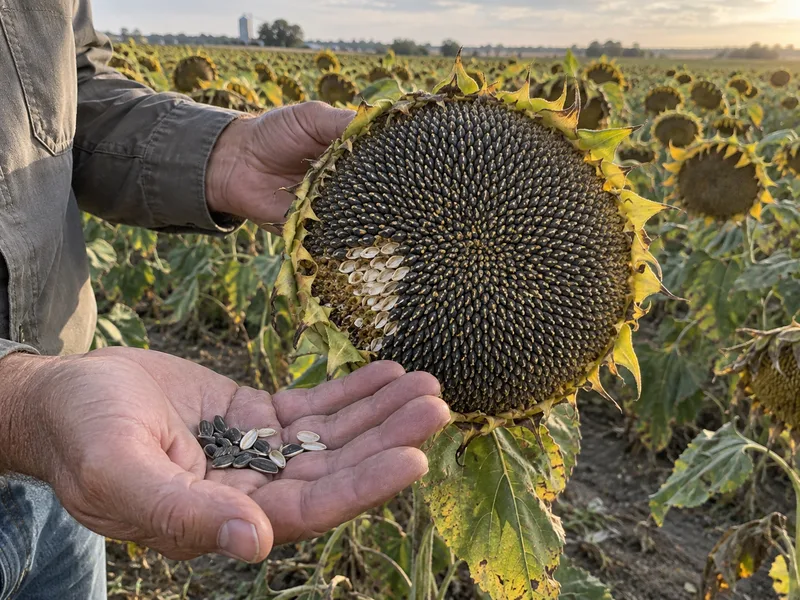
The head looked full from the edge of the field. In your hand, several of its striped shells feel almost weightless. That is a different observation from “the sunflowers failed”: the next question is where the empty shells occur, and whether they are actually empty rather than damaged or still immature.
Wait until the head is mature enough to sample without guessing from soft, developing seed. Take a few heads from different parts of the planting, not only the largest or the one beside the path. Mark where each came from. A single showy head can tell you what to inspect, but it cannot describe the whole field.
Make a small seed map
From each head, remove a narrow wedge of seed from the outer ring toward the center. Separate firm, filled seeds from flat shells and from seeds with holes or obvious feeding injury. Keep the center sample separate: its seeds are normally smaller, so size alone is not proof of failure. North Dakota State University Extension's sunflower sampling method distinguishes filled seed, damaged seed, center seed set and bird loss when estimating a crop.
Look at the pattern before naming a cause. Is the unfilled area confined to the center of many heads? Are empty shells scattered through the wedge? Are there visibly chewed seeds or missing patches on exposed heads? Those are different field notes. Count a small, consistent sample from several heads and record the proportions; do not turn one handful into a percentage for the entire planting.
Read backward to flowering
A shell that never filled does not tell you by itself which step went wrong. Review the flowering window: was the soil unusually dry, did plants wilt, and was bloom interrupted by prolonged poor weather? Did you see bees working the heads? Modern commercial sunflower hybrids can self-pollinate, so “no bees” is not a complete diagnosis. Pollinating insects can still improve seed set; NDSU's sunflower production guide makes that distinction rather than treating all sunflower types alike.
Water stress also deserves a place in the timeline, especially from flowering into seed development. It is not a license to flood the crop now. NDSU's irrigation review notes that water deficiency from flowering to maturity can affect yield. Compare soil moisture history and plant condition across the same field zones where you sampled the heads. If poor fill follows a dry ridge but heads in a lower, better-watered area filled well, that contrast is more useful than a general rule to “add more water and fertilizer.”
Keep injury separate from failed development. Bird feeding can remove already formed seed; insects may damage developing seed; mold or rot calls for its own assessment. A missing seed, a punctured seed and an intact but light shell should not all be counted as poor pollination. The head-by-head sample helps prevent that mistake.
Decide what the sample can change
At maturity, you cannot fill an empty shell with a late feed or a hand-pollination pass. You can estimate how widespread the problem is, protect harvestable heads from further loss, and keep an honest record for the next planting. Note variety or hybrid, bloom dates, rainfall or irrigation, pollinator activity observed, and the locations of damaged versus unfilled seed. When the cause remains uncertain, take representative heads to a local extension or crop adviser rather than prescribing a spray from a photograph.
If the sunflowers are grown beside another crop, first make sure you can still reach a representative line of heads without selecting only field-edge plants. Our sunflower–soybean field-boundary piece is about that access and visibility, not seed-set diagnosis. Here the practical gain is simpler: a small, repeated sample turns “empty seeds” into a pattern you can investigate.