After a dry stretch, a rainstorm passes through your pomegranate planting. The next morning one fruit is split wide enough to show its arils, another has a narrow line in the rind, and several beside them remain intact. Should you strip the branch before more fruit opens? Not necessarily. These fruit have different handling priorities, and an unripe pomegranate will not become ripe simply because it was picked early.
Start with a walk through several trees, including sunny exposed sides and any low, wet patches. Record the first cracks and check again after the weather clears. This is a harvest-triage problem, not a signal to apply a late spray or a blanket watering schedule.
Sort the fruit before reaching for the shears
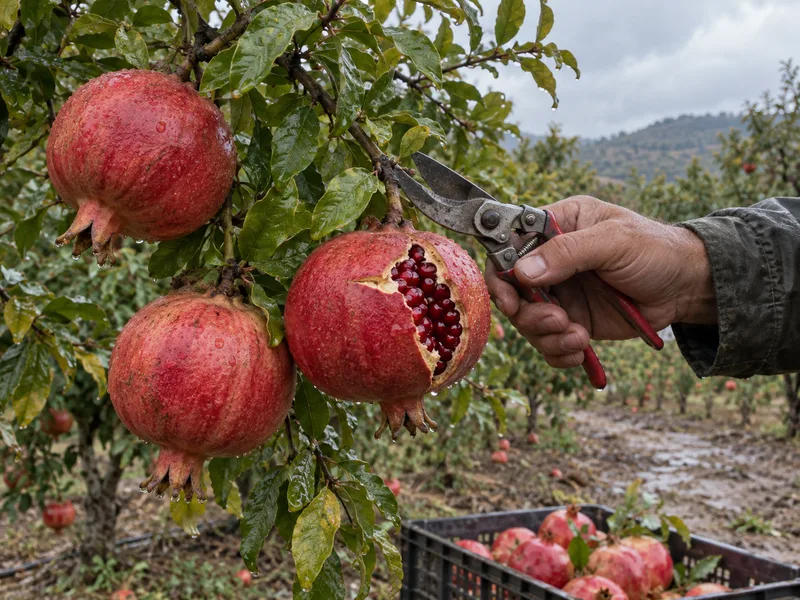
Open split: When arils are exposed, do not treat the fruit like sound storage stock. Clip it promptly, keep it separate, and inspect the interior. Discard fruit with mold, decay, insect contamination, off smells or other signs of spoilage. An otherwise sound split fruit may be evaluated for immediate household use, but a crack makes long storage a poor bet. UC Master Gardeners' harvest guidance makes the same distinction between usable cracked fruit and fruit suitable for storage.
Fine surface line: Look closely rather than assuming every mark penetrates the rind. If the skin is actually broken, handle it as damaged fruit and monitor it closely; if it is only a superficial mark, reassess maturity and the fruit's condition. A photograph today helps you tell whether the line widened tomorrow. Do not press hard on fruit to test it.
Intact fruit: Decide from maturity, not from the fact that a neighbor split. Compare several fruit of the same cultivar, their characteristic rind color and shape, and what earlier harvests from that tree were like. Color alone varies by cultivar; a single tap or a calendar date is not a universal ripeness test. Pomegranates do not continue to ripen after harvest, so picking all the firm green fruit to beat tomorrow's rain trades one problem for another.
Make two passes if ripening is uneven
On the first pass, remove fruit with exposed flesh and separate it from the sound harvest. On the second, clip mature intact fruit that is ready now. Leave intact fruit that still needs time, then inspect again rather than guessing a fixed interval. A storm may make the decision urgent for an already mature fruit, but it cannot finish ripening an immature one after picking. University of Georgia's production guide advises clipping pomegranates instead of pulling them and notes that splitting increases storage and decay problems.
Use clean, sharp shears and leave a short stem without stabbing neighboring fruit. Carry the harvest in a shallow container, avoid stacking cracked fruit against sound fruit, and keep the picked fruit out of sun while sorting. Do not promise a storage life from the appearance of the rind alone: even a small opening changes the handling decision. For intact fruit, follow appropriate local storage practice for the cultivar and intended use.
One split fruit is not proof that every tree has an irrigation fault. Check whether cracking clusters on exposed sides, at the edge of a dry zone, or where water stands. Note cultivar, recent soil moisture, rain, sun exposure and harvest stage. Those observations tell you much more than a photo of the worst fruit alone.
Change the moisture pattern next season, not the story about this fruit
Rapid change from dry conditions to abundant water can contribute to rind splitting near maturity. Consistent root-zone moisture through fruit development and sound drainage reduce the extremes, while harsh sun exposure can weaken the rind. The Georgia production guidance cautions against both drought stress and excessive late irrigation. That is not a prescription for a particular number of liters or days everywhere: soil, rainfall, root depth and irrigation method differ.
The harvested fruit cannot be repaired with fertilizer, calcium spray, growth regulators or a fruit bag applied now. The crawled reference material lists several such treatments with fixed concentrations and region-specific dates; we did not carry those into this guide as universal recommendations. If splitting repeats across seasons, compare affected cultivars and sites, test how water actually moves into the root zone, and consult a local extension service before changing inputs.
This late-season decision is separate from the early-summer pomegranate crop-load walk, which deals with fruit set and branch load before harvest. Today the practical answer is narrower: separate damaged fruit, clip sound ripe fruit gently, and leave genuinely immature intact fruit to develop while you keep watching the weather.