Ice plant is easy to treat as a novelty leaf: a compact edible plant that looks finished as soon as the pot looks green. A small container tells a more useful story. The leaves, surface of the growing mix, and empty space around the crown stay close enough together that a gardener can notice change without having to guess across a whole bed.
That makes it a good crop for a modest outdoor bench, patio, or garden edge. The aim is not to force fast growth or follow an identical daily routine. It is to set up a root zone that can be checked calmly, then let the container answer the next question through what it actually shows.
Start with a pot that leaves some soil in view
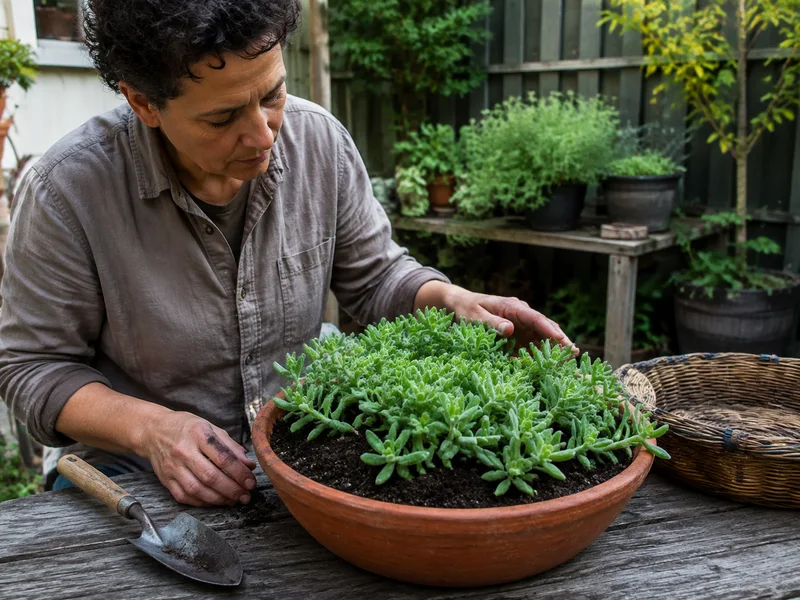
When the container is filled too densely, the leaves can hide every useful clue at the surface. Leave enough open area near the plants that you can see where water has reached, whether the mix has settled, and whether a small adjustment is really needed. The pot does not need to look bare; it needs to remain understandable after the leaves begin to spread.
Place the container where it can be visited without making care into an event. A crop at the far end of a garden may get a rushed look only when there is a larger task underway. A pot near a path or work surface invites shorter, more honest checks: a glance at the leaves, a look at the soil, then a decision to leave it alone or return later.
Use the container as a comparison, not a schedule
Instead of deciding that every visit must end with the same action, compare the pot with itself. Notice how the leaves are holding their shape, how the surface looks close to the crown, and whether the container feels like the same small system you saw on the last visit. A change is worth noticing; it is not automatically an instruction to intervene.
- Can you still see the growing mix near the base of the plants?
- Do the leaves look like they have space to expand without being pressed into one another?
- Would a harvest leave enough of the container easy to inspect next time?
These are deliberately small questions. They prevent a container crop from being managed by a borrowed calendar that may not match its exposure, its mix, or the way the gardener actually uses the leaves.
Harvest for the meal you have in mind
For a small edible container, harvest is part of the care pattern rather than a final event. Take what is wanted for a meal and leave the pot in a condition that can still be read. That might mean pausing before taking the last convenient handful, or choosing leaves from more than one side instead of opening one empty gap at the front of the pot.
The purpose of a crop changes how the container is planned from the beginning. The pea shoots or pods guide follows that choice in a larger bed: one crop can lead to different work when the intended harvest is named early. Ice plant is usually picked as a fresh leaf, but the same principle applies: set up the pot for the way it will actually be used.
Keep the note with the pot, not in a generic rulebook
A short note can be more useful than a detailed care chart: where the container sits, what the leaf growth looked like at the last check, and what was picked. If the pot later needs a closer look, that small record gives the gardener a real comparison point. It also keeps one unusual crop from becoming a reason to over-manage every other leafy container nearby.
Leafy crops do not all ask for the same handling. The lettuce growing guide looks at a crop often managed through succession and changing heat conditions. Ice plant in a container is a smaller, more contained observation. Treating the two as identical would hide the advantage that a single well-placed pot can offer: a root zone and a harvest habit that remain easy to understand.