Most okra pods disappear from the plant while they are still green, tender and easy to cut. A seed pod follows the opposite timetable. It stays on the plant until it is dry, firm and far beyond the stage anyone would want to cook.
That makes seed saving less a matter of “forgetting one pod” and more a small management decision. The pod must be chosen, marked and allowed to finish without being mixed into the harvest basket. Meanwhile, the rest of the plant still needs frequent picking.
Read the packet before reserving a pod
Start with the variety name. Seed saved from an open-pollinated variety is generally the more predictable choice for a home seed-saving project. Plants grown from an F1 hybrid may produce viable seed, but the next generation can separate into different traits and may not resemble the plant you selected. The University of Minnesota's seed-saving overview explains why open-pollinated and hybrid seed should not be treated as equivalent.
Keep the original packet or photograph both sides of it. Record the variety, seed company, sowing year and whether the packet says hybrid, F1, open-pollinated or heirloom. If the variety is protected by a patent or other restriction, check the packet terms before saving it. A label reading only “green okra” is not enough to tell you what will come back next season.
Also note other okra varieties flowering nearby. Cross-pollination does not change the pod you are harvesting now, but it can affect the plants raised from its seed. Isolation requirements depend on the goal and garden setting, so do not invent a universal distance from a small backyard bed. If varietal purity matters, use a recognized crop-specific seed-saving method; otherwise label the seed as a home-garden selection with possible crossing.
Choose a representative plant, not merely the biggest pod
A useful seed pod begins with a plant worth observing again. Look for a healthy plant that developed normally in your conditions and carries the characteristics you value. Avoid choosing only because one pod became enormous after being missed. Size alone says little about the plant's overall performance or whether the pod matured without damage.
The cleaned source material from the harvested archive recommends selecting a sound pod from the middle portion of a representative plant rather than relying on a weak early pod or a very late pod that may not finish. That is a reasonable field rule, but it is not a guarantee. Weather, disease and the remaining frost-free period still decide whether the seed reaches maturity.
For a first trial, reserve a small number of clearly identified pods rather than turning most of a short row into seed plants. For a more durable seed line, collect from several suitable plants so the saved lot does not represent one individual by accident. The University of Georgia's seed-saving guide similarly recommends collecting from several plants and fruits when space allows.
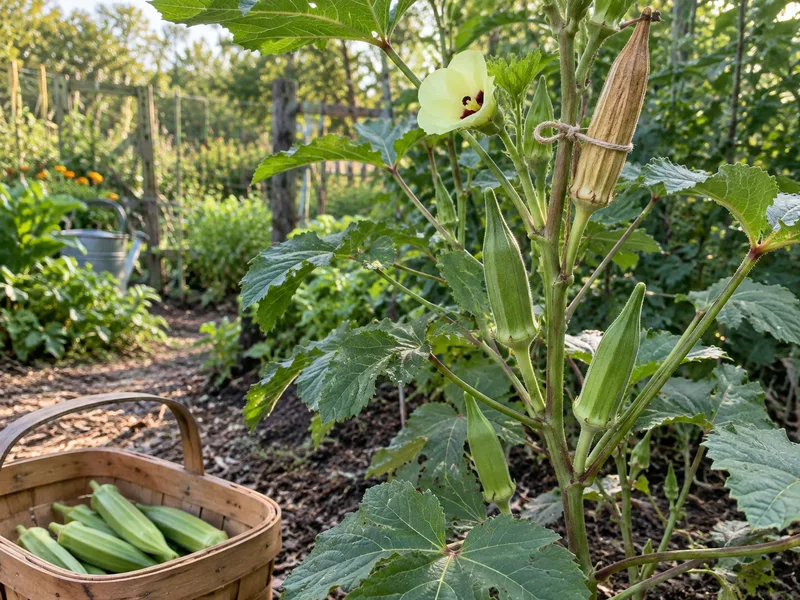
Mark the seed pod and keep harvesting around it
Tie a loose loop of natural twine below the chosen pod, where it will remain visible without constricting the stem. Add the plant position to a notebook: for example, “third plant from the path, east row.” A marker attached only to the pod can fall away; a note based only on memory becomes unreliable when several dry pods appear.
Continue cutting the other tender pods on schedule. Home-garden okra grows quickly, and the UGA home-garden okra guide advises harvesting every few days rather than allowing edible pods to become fibrous. Pod length is only a starting cue because varieties differ. Learn the normal tender stage of your own variety, and do not use the dry seed pod as a model for edible harvest.
Leaving a pod to mature can reduce later production from that plant. Treat this as the cost of making seed, not as evidence that the whole row has failed. If fresh pods are the main priority, choose one or a few seed plants and keep the rest of the row in its normal picking rhythm.
A brown pod is ready only when the seed is mature and dry
Colour changes first, but colour alone is not the finish line. A mature okra seed pod becomes tan to brown, dry and firm; the walls lose their fleshy character, and fully dry seeds may rattle inside. UGA's dry seed method lists okra among crops whose pods can ripen and dry on the plant before the seed is removed.
Distinguish normal drying from collapse caused by rot or injury. A pod with wet dark lesions, soft tissue or mould is not improved by leaving it longer. Remove questionable material from the seed lot. After rain, wait until the surface is dry before handling sound pods; if prolonged wet weather threatens a pod that has already reached full maturity, cut it with a short stem and finish drying it under cover with good air movement.
Wear gloves or long sleeves if okra hairs irritate your skin, and use clean shears rather than twisting a brittle pod against the stem. Place each variety in a separate paper bag as soon as it is cut. The bag should already carry the variety and harvest date, because detached dry pods are remarkably easy to confuse.
Open, dry and test a small lot before trusting the whole bed
Let the harvested pods finish drying in a protected, ventilated place. Open them over a tray, remove visibly damaged seed and keep different plants or varieties separate until you have finished assessing them. Seed placed in an airtight container before it is fully dry can trap moisture, so complete drying comes before sealed storage.
Label the final packet with crop, variety, source plant or row, harvest year and any uncertainty about crossing. Store it cool, dark and dry. A label such as “okra, 2026” preserves too little information; next spring it will not explain why two envelopes behave differently.
Before committing the next bed, germinate a small counted sample and record how many seedlings emerge normally. This does not predict every field condition, but it tells you more than assuming every saved seed is usable. When you assess that test, the same group-level thinking used in the pepper seedling emergence guide is helpful: compare the whole batch, not the first seedling that appears. More planting and harvest decisions are collected in the vegetable seedling and harvest topic.
A successful seed pod is not simply the one that became driest. It is the one whose identity stayed clear from packet to plant, whose maturity was observed rather than guessed, and whose seed is checked before it is asked to fill next season's row.