Okra rarely announces the right picking moment from the end of a row. A pod can move from tender to too firm while it is hidden behind one large leaf, and a few missed pods make the next harvest feel like a search rather than a routine.
A useful harvest system is built around visibility. When the same areas are checked in the same order and the plants remain reachable, picking becomes a quick way to monitor new flowers, crowded stems, and the next round of pods at the same time.
Start with the pods you can reach without moving the canopy
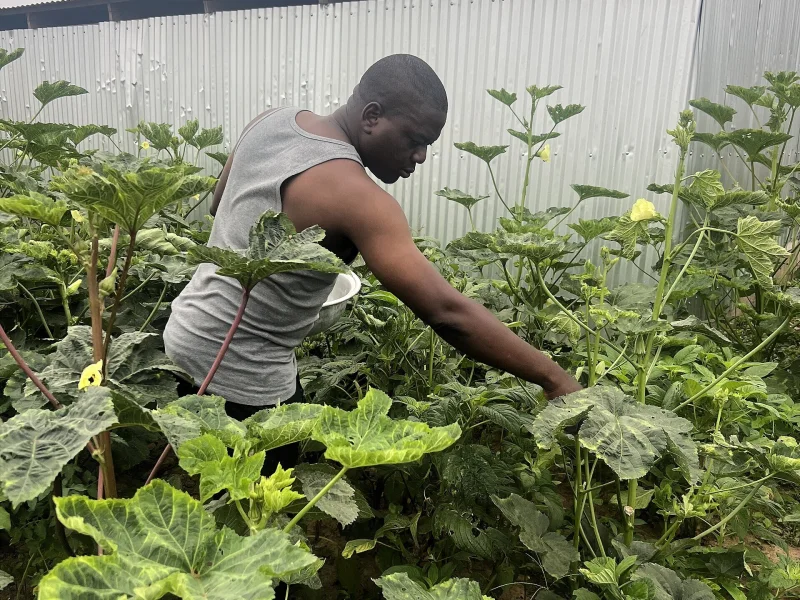
Begin from one end of the row and work at a steady pace rather than scanning randomly for the largest pod. Look first around the newest leaves and flowers, then move down each plant before stepping forward. This gives young pods less time to disappear into foliage and makes it easier to notice where the row is becoming difficult to enter.
The goal is not to harvest every plant in exactly the same way. It is to establish a repeatable route that lets you compare what has changed since the last pass. A missed pod is useful information too: it may show that a leaf, branch, or planting path is now blocking the view.
Judge tenderness before size becomes the only signal
Okra intended for fresh use is usually best while the pod is still young and flexible. Instead of relying on one fixed measurement, compare the pod with nearby newly formed pods and pay attention to whether it still looks smooth, bright, and easy to cut. When the surface has become dull or the pod feels tough, it has already moved beyond the tender stage for many kitchen uses.
Checking frequently is more reliable than waiting for a row to look full. A small basket collected in several quick passes can be more useful than a large, uneven harvest after pods have been left among the leaves for too long.
Keep the harvest lane open as plants gain height
Okra can become tall and leafy while it continues setting pods along the stem. Do not force yourself between plants at every harvest. Step back and identify the places where leaves or side growth now cover the picking side of the row, then make only the smallest adjustment needed to restore a clear view.
This is similar to the access problem that develops in a long cucumber row: the practical decisions in this cucumber vine and harvest guide are a useful reminder that a productive plant still needs a route for observation and picking. For okra, an open lane helps you find tender pods before they become hidden behind the next flush of leaves.
Use each harvest to read the next flush
After picking, pause for a short check before moving on. Are new flowers appearing where you can see them? Are pods forming at a comfortable height? Is one section carrying dense leaves but few visible pods? These observations are more useful when they happen during the normal harvest than when they are postponed until the crop looks uneven.
Do not respond to every difference with heavy pruning or a new schedule. First restore access, remove only what is clearly blocking the harvest lane, and check again on the next pass. The same observation-led approach helps with other repeat-harvest crops, including the timing decisions described in this pepper harvest and next-flush guide.
Let an overgrown pod improve the next round
An overgrown pod is not a reason to rush through the rest of the row. Mark the point where it was missed mentally, then ask what prevented you from seeing it: a changed picking route, too much foliage, or a gap between harvests. Correcting that one cause keeps the next pass calmer and more consistent.
The best routine is modest: pick the tender pods, note the places that are becoming hard to read, and make one small access correction before leaving the row. Over time, that rhythm keeps harvest quality connected to the way the plants are actually growing.