The little zucchini was already there when the flower opened. Two days later its tip is yellow and the fruit has stopped growing. It is tempting to blame the plant for “dropping a finished fruit,” but that miniature zucchini is the ovary behind a female flower; its presence alone does not prove pollination happened.
For an ordinary seed-producing variety, the useful evidence is found on the morning flowers are open: a female flower, a source of pollen and a way for pollen to move between them. After that, watch the fruit and the whole plant. A single yellow tip can have more than one explanation.
Find the small fruit before you inspect the petals
A female zucchini flower has a swollen miniature fruit directly behind the petals. A male flower is carried on a narrower stalk without that swelling. Both types normally grow on the same plant. Early flowers are often male, so a few blossoms that fall without tiny fruit attached are not themselves proof that the planting has failed. University of Minnesota Extension describes this early-flowering pattern and the difference between the two flowers.
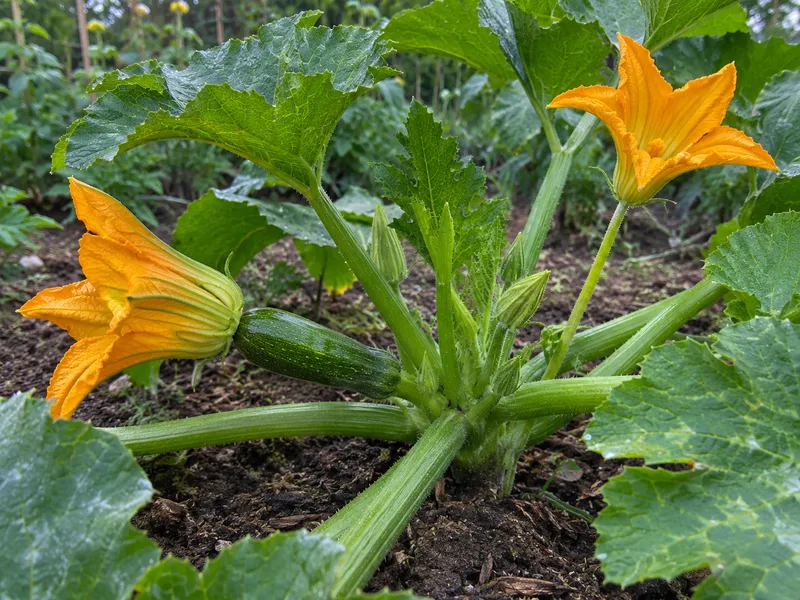
Check the variety name, too. Some specially bred parthenocarpic zucchini can develop fruit without pollination, although their performance still depends on the variety and conditions. University of Maryland Extension lists examples. The rest of this check concerns the usual varieties that rely on pollen transfer; do not assume every zucchini packet describes the same flowering requirements.
Use the morning window
Look when fresh flowers are open, usually in the morning. Squash flowers have a short working life, and a wilted flower from yesterday cannot be treated as if it had just opened. Watch briefly for visiting bees. Was a row cover still blocking access? Was it cold, rainy or very hot during flowering? Low bee activity and stressful weather are clues, not a final diagnosis. Minnesota's cucurbit flowering notes explain why flower timing and weather matter together.
In a small garden, hand pollination can be a useful comparison. Find a newly opened male flower with visible pollen and a newly opened female flower. Gently transfer pollen from the male anther to the female stigma with a small clean brush. They can be flowers on the same zucchini plant; a second plant is not automatically required. University of Florida guidance describes the morning brush method.
Mark the flower you assisted and leave another comparable open female flower for normal insect visits. Record the date and compare the young fruit over the next several days. This is a practical observation, not a controlled experiment: flowers differ in age and plants experience changing weather. If no male flower is open with pollen, wait for the next suitable opening rather than brushing a closed flower the day before.
Separate a pollination clue from a rotting fruit
A young fruit that remains undersized, yellows unevenly or shrivels after flowering can be consistent with inadequate pollination. It is not a laboratory test. A dark, sunken, leathery patch specifically at the blossom end can instead fit blossom-end rot; inconsistent moisture and other stress can contribute. Fuzzy growth and a soft, spreading rot call for a different assessment again. The Maryland squash symptom guide shows these as separate problems.
Look at the position and texture of the damage, the old blossom, nearby fruit and recent watering. Remove and discard fruit that is soft, moldy or actively rotting. Do not apply a calcium product just because the tip looks different, and do not assume a clean brush will fix a rot problem. If symptoms keep spreading, take clear photographs of the whole plant and affected fruit to a local extension adviser.
Make the next flowers accessible
On a conventional variety, uncover blooms when it is safe to remove protective netting, so pollinators can reach them. Avoid disturbing visitors in the brief morning flowering window. Keep the root zone supplied with water according to actual soil moisture and drainage, especially through heat, rather than following a fixed daily schedule. Do not strip healthy leaves simply to make the flowers easier to see.
The same flower-base distinction is useful when checking bitter melon flowers and fruit set, though the crops differ in growth habit and timing. For zucchini, follow the new female flowers over several mornings. If assisted fruit enlarges while comparable unassisted fruit repeatedly fails, poor pollen transfer becomes a useful possibility to investigate; it still does not rule out weather or plant stress.
Keep the decision modest: identify the open female flower, check for fresh pollen and pollinator access, then watch what happens to the next fruit. If the plant has only recently begun flowering, give it time to produce both flower types before changing the entire growing routine.